Telehealth

Internal sponsors have been hugely helpful in encouraging their peers to adopt telehealth and RPM at Providence, says Dr. Eve Cunningham, the health system's chief of virtual care and digital health, and a HIMSS24 Changemaker.

Securing transportation and other needed resources for patients through text messages is one way to ensure health equity for the underserved, says Dr. Emily C. Webber, CMIO at Indiana University Health and 2024 Changemaker Award winner.
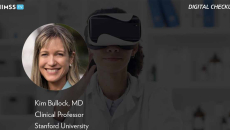
Medical XR use in psychotherapy and its validity in mental healthcare offerings discussed by Dr. Kim Bullock, a psychiatrist, neuropsychiatrist and founder of the Virtual Reality and Immersive Technology Clinic at Stanford University.

Artificial intelligence can enhance virtual nursing, quality and outcomes, and healthcare transformation, says Dr. Stephanie Lahr, president of Artisight, a healthcare AI technology company. She shows how.

Sensors and automation tech can allow nurses to interact with and monitor multiple hospital patients around the clock without entering their rooms or interrupting their sleep. Michael Brandofino, president and COO of Caregility, explains how.

Through the power of collaboration, Telehealth services have no boundaries. Three companies joined forces to create a groundbreaking custom Telehealth workflow that enabled confidential video-based engagement.

The chief medical information officer of the Maine health system gives an update on its collaboration with Optum, talks AI and gives a preview of his HIMSS24 presentation on tighter telehealth integration.

The Federal Bureau of Prisons is working with Bicycle Health to give individuals released from prison continued access to monthly injections of buprenorphine for opioid use disorder. Bicycle Health CEO Ankit Gupta offers a deep dive.

Remote Patient Monitoring
Done right, more widespread adoption of remote patient monitoring will offer breakthrough innovations where healthcare delivery can be improved, clinician workloads can be right-sized and better patient outcomes can be achieved, an expert says.

With telemedicine, the time for patients coming out of the ER or a convenience clinic to see a primary care provider has gone from weeks to 24-72 hours. And virtual care has helped the health system achieve a 72% completion rate of Medicare annual wellness visits.