Quality and Safety

Health systems have reduced patient falls and increased sepsis recovery rate by using AvaSure's virtual nursing platform to assist on-site RNs, says Adam McMullin, the company's CEO.

To help health IT leaders address the risks associated with AI, here are some key steps to help approach digital transformation in a safe and sustainable way.

DeepScribe has worked to build trust in its ambient AI by deploying validation models that prevent inaccuracies and maintain the integrity of the clinical documentation it generates. Matthew Ko, its cofounder, president and COO, explains.
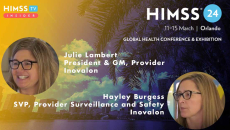
Inovalon acquired VigiLanz to bring real-time surveillance software that can help prevent adverse hospital events. Inovalon's Julie Lambert, president and provider GM, and Hayley Burgess, SVP for provider surveillance and safety, offer a deep dive.
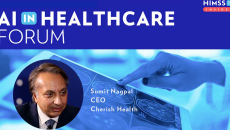
Radar offers new opportunities to track patients in the home without using wearables, says Sumit Nagpal, CEO of Cherish Health – who recalls some sage advice he received from Steve Jobs when pitching the idea years ago.
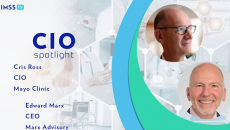
Ahead of HIMSS24, they discuss their upcoming book, "Diagnosed," which is written for patients navigating their care journey, and preview an accompanying white paper designed to help IT leaders create intuitive and empathetic patient experiences.
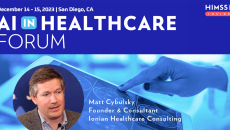
How can providers and payers use AI and machine learning in value-based care and preventative care to forecast the onset of health conditions and alter patient behavior? Ionian Healthcare Consulting’s founder and consultant Matt Cybulsky has some answers.
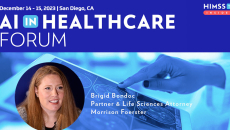
The year ahead will see policies evolving along with the tech, says Brigid Bondoc, partner and life sciences attorney at Morrison Foerster, who discusses regulatory approaches that foster innovation while protecting safety.

A randomized clinical vignette survey across more than a dozen states, with hospitalists, NPs and PAs taking part, evaluated systematically biased algorithms and how clinicians make decisions with image-based AI guides.

Remote Patient Monitoring
Done right, more widespread adoption of remote patient monitoring will offer breakthrough innovations where healthcare delivery can be improved, clinician workloads can be right-sized and better patient outcomes can be achieved, an expert says.