Privacy & Security

Security
Medical devices must be managed from a security perspective, but also from an operational perspective. Using analytics to establish behavior baselines helps support risk assessments, find malfunctions and enhance staff productivity.

SPONSORED
 |
03:29 pm |
August 09, 2019
|
03:29 pm |
August 09, 2019
|
03:29 pm |
August 09, 2019
Kathy Minnis, director of product strategy at Microsoft, discusses how putting the right tools in clinicians’ hands can remove barriers to reconnecting with patients, while protecting data privacy.
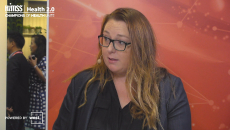
Codesain CEO Rachel De Sain says Australia's My Health Record provides more than 90% of the country's citizens with a national eHealth record that can help them improve their digital health journey.
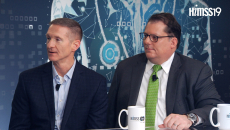
Dan Bowden, CISO, and Michael Reagin, CIO of Sentara Healthcare, see big advances in cloud security – with a deeper understanding of the configurations needed for data privacy in the public cloud.

Julio Vivero, business partner at GMV, says medical devices and data privacy are two huge cybersecurity issues the healthcare industry is facing, and a one-size-fits-all approach is not the solution.

Finland and Estonia use X-Road to enable the secure exchange of data, with opportunities to expand to the rest of Europe, says Petteri Kivimäki, CTO for Nordic Institute for Interoperability Solutions.
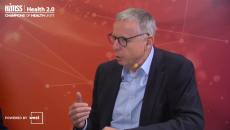
Dr. Markus Müschenich, MPH, managing partner at Flying Health, says integrating healthcare into self-driving cars will present a completely new global business opportunity for digital health companies.
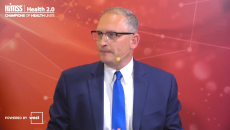
Organizations need to inform their workforce about cybersecurity risks as well as ensure that a proportional investment is made into security to ensure risks are mitigated, says Ronald Petru, CMIO at Radboudumc in the Netherlands.

Workforce Development
Putting an infosec program into place is a balancing act, requiring a very careful approach and significant involvement from a wide array of stakeholders, says Penn Medicine CISO Dan Costantino.