Population Health
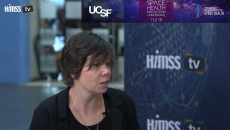
Kristin Fabre, senior innovation scientist at the Translational Research Institute for Space Health based at Baylor College of Medicine, says TRISH is holistically looking at astronaut health.

Dr. Rashmee Shah of the University of Utah Hospital says that in an age of countless sensors and data streams, what's needed is the collection and analysis of less, but more focused, patient data.
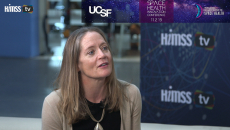
Mary L. Bouxsein, professor of orthopedic surgery at Harvard Medical School, discusses how to maintain the muscular skeletal system in long-duration space flights such as a mission to Mars.

Philips Chief Nursing Officer Cindy Gaines, who toes the line between caregiver and technologist, has a unique view on value-based care, patient experience and population health.
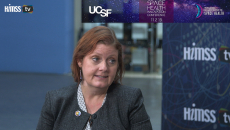
Julie Robinson, chief scientist at NASA's ISS division, says findings on the effects of space travel on human health are being used to prepare for a long-term mission to Mars.

Speaking from experience, Bradford Power, founder of Reengineering Cancer Treatment and an author focused on process improvement, discusses the ways oncology treatment needs to become more personalized.

SPONSORED
 |
07:55 am |
November 05, 2019
|
07:55 am |
November 05, 2019
|
07:55 am |
November 05, 2019
Nonin Medical's Chris Holland and telehealth consultant Mark VanderWerf discuss the usability and logistics improvements Nonin made to its pulse oximeter to make it more desirable for the elderly.
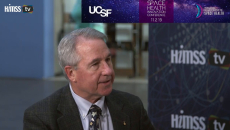
Former NASA astronaut Stephen K. Robinson, now a mechanical and aerospace engineering professor at UC Davis, says space health research offers insights into areas of aging, including osteoporosis and neurovestibular system issues.
Dr. Tim Mercer, director of global health of Dell Medical School at the University of Texas at Austin, describes the challenges in caring for homeless and other underserved individuals.
Nick Woods, co-founder of California-based Hazel Health, says virtual care delivered from the school nurse's office is improving students' access to doctors.