Government & Policy
Leaders at ONC's annual meeting were asked whether they're confident that federal agencies and the private sector can work together to foster innovation while protecting against bias and safety risks. Here's what they had to say.

By creating new definitions and revising others, the proposed rule targets health and wellness technology companies operating outside of HIPAA and qualitatively expands the scope of what constitutes a PHR.
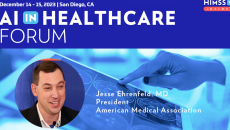
The American Medical Association's principles on the development and deployment of AI highlight members' concerns and consider who should be held liable, says Dr. Jesse Ehrenfeld, president of AMA, speaking from the HIMSS AI in Healthcare Forum.

Boston Children’s, CVS, Geisinger, UC San Diego and Wellspan are among the 28 providers and payers promising their AI and machine learning models are geared to ensure healthcare outcomes that are "Fair, Appropriate, Valid, Effective and Safe."

The agency said the new strategy is critical to achieving its goal of reducing cancer deaths by 50% and improving the burdens of cancer treatments on patients and families.

Despite broad concern by health IT developers and owners, some deadlines have been pushed out in HTI-1, the new federal rule governing certification, AI transparency and other standards, while those for decision support algorithms have not.
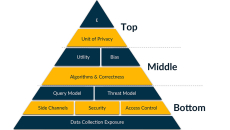
The National Institute of Standards and Technology created guidance for evaluating differential privacy algorithms that could allow data to be publicly released without revealing the individuals within the dataset.

Five QHINs have completed the onboarding process, according to ONC, and will now drive higher levels of healthcare information interoperability across the U.S.

This agency's first data breach settlement under HIPAA for a phishing attack involved the alleged failure to conduct a risk analysis to identify potential ePHI threats or vulnerabilities across the Lafourche Medical Group network.

The new public-private collaboration Insight Net is using advanced biosurveillance to respond to outbreaks and prevent future pandemics. Dylan George, director of the CDC's Center for Forecasting and Outbreak Analytics, explains more.