Artificial Intelligence

Remote Patient Monitoring
A nurse remote patient monitoring expert explains why she's seeing more providers looking for new tools to help manage CHF – and how advancements in virtual care are allowing more patients to be cared for at home.

The migration will allow it to integrate AI tools to deliver clinical efficiencies.

The Digital Medicine Society's seal aims to evaluate health application products' baseline security, usability and clinical return on investment to help decision-makers scrutinize which tools are best for patient care.
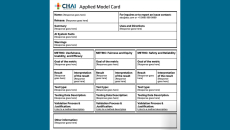
The coalition's new draft certification frameworks, which could be finalized in six months after more stakeholder feedback, offer a way forward for artificial intelligence assurance labs and basic model transparency.


The new investment will also promote the wider uptake of medical imaging AI by 2025.

SPONSORED
 |
04:01 pm |
October 18, 2024
|
04:01 pm |
October 18, 2024
|
04:01 pm |
October 18, 2024
Executive leaders increasingly see AI as a digital technology investment that provides significant competitive advantages. However, an enterprise-wide digital platform approach is needed for AI tools to bring gains in productivity, experience and revenue.

SPONSORED
|
03:59 pm |
October 18, 2024
|
03:59 pm |
October 18, 2024
Many organizations are operating on a fractured technology platform of hundreds, or even thousands, of solutions and apps that are neither connected nor integrated, resulting in siloed data, inefficient processes and costly technical debt.
SPONSORED
|
03:57 pm |
October 18, 2024
|
03:57 pm |
October 18, 2024
Generative artificial intelligence (AI) tools that analyze large quantities of data and use natural language processing (NLP) algorithms to answer queries with relevant, accurate information can help healthcare organizations streamline hospital operations, reduce costs and increase efficiencies.
SPONSORED
|
03:55 pm |
October 18, 2024
|
03:55 pm |
October 18, 2024
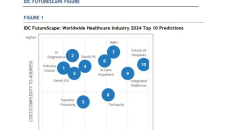
These predictions for 2024’s healthcare industry landscape reflect the increasing drive to automate and deploy AI applications to reduce costs and improve patient care quality.