News

Remote Patient Monitoring
Only 0.6% of remote encounters managed by the health system's remote patient monitoring vendor's caregivers escalate to Providence clinicians. Hypertension RPM patients saw a 12.55% reduction in systolic blood pressure by week 12.
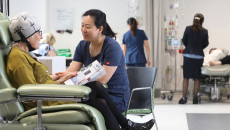
A particular technology has enabled one of NSW's busiest private cancer centres to quickly implement the latest cancer treatment guideline.

The release of CA v2.0, updated to require support for API exchange using the HL7 spec, allows TEFCA to "keep pace with the advanced, secure data services approaches" employed by the larger tech industry, says National Coordinator Micky Tripathi.

Nurses and others providing inpatient care are struggling the most with documentation burden, but a new Arch Collaborative report offers some advice on helping reduce nurse burnout and turnover.

Remote Patient Monitoring
If the CPT Editorial Panel approves new changes and Medicare and private payers follow suit, providers that expand their remote patient monitoring programs to fit the new codes will gain the most benefits for their patients and clinics.

Unable to claim payments, more than half of physician practice respondents in a new American Medical Association survey reported using personal funds to cover expenses, and 31% said they could not make payroll.

Digitalisation in healthcare holds the promise of optimising processes and expanding access to care. In some European countries such as Slovenia, Croatia, Estonia, Poland and Hungary, patients can access national portals that contain their prescriptions, referrals, discharge letters, etc. In other countries such as Belgium and Spain, patients can access regional portals. In the Netherlands, Germany and Switzerland, individual healthcare providers offer their own patient portals. This means if a person visits multiple facilities, they must use different portals to access their health data. The European Health Data Space (EHDS) legislation aims to improve access to and control by individuals of their electronic health data, expand healthcare data accessibility across borders, and use healthcare data for patient acute care and research.
The range of changes tech could in theory bring to healthcare is extensive, including the following:
Faster access to and improved coordination of care by having a more direct channel with clinicians through an online portal.
Time saved by opting for telemedicine over an in-person visit.
More precise diagnoses with the help of AI.
Reduced burden on frontline staff due to tech-enabled capacity optimisations.
On the dark side, there are patient concerns: Will my data be exploited? Is it safe? Will I lose the connection with my doctor? After all, people, especially those in vulnerable health situations, crave human touch and a reassuring voice.
What do patients worry about?
The European Patients' Forum is an umbrella organisation of patient organisations across Europe, with its 79 members including disease-specific patient groups active on the EU and national levels in Europe.
Patients have a number of concerns about the digital transformation of healthcare, according to Gözde Susuzlu Briggs, programme manager at the European Patients' Forum:
Digitalisation could exacerbate existing health inequalities, especially where there is a significant digital divide.
There is a risk of unauthorized access to or breaches of patients' personal health information (PHI).
A lack of interoperability is hindering effective care.
There are worries about the affordability and accessibility of digital health solutions.
The shift to digital health requires an adjustment in how patients interact with healthcare systems.
It is very difficult to stay on top of innovation in digital health.
"Patient communities know their disease areas quite well, but in terms of other advanced technologies or work that's around legislations and legal frameworks are topics that are quite new unless it's their profession," Briggs said.
Improving digital literacy and involving patients in the development of solutions are crucial for building public trust and ensuring a positive user experience.
Education, explanation, collaboration
On the EU level, several organisations work with and for patients on inclusion in data management and improving digital literacy. Non-profit organisation EUPATI (European Patients Academy on Therapeutic Innovation) provides education and training to increase the capacity and capability of patients and patient representatives in medicines R&D. In 2023, EUPATI designed a Digital Health module that provides an overview on digital health and its regulatory framework.
"Based on the feedback so far, real-world evidence and real-world data seem to be specific areas where patients struggle to fully understand their role and relevant opportunities for involvement," said Maria Dutarte, executive director at EUPATI.
More workshops and … national marketing?
"I haven't yet met a patient who wants all their healthcare from a computer, including myself," said Kristof Vanfraechem, founder and CEO of Data for Patients – a European organisation focused on bringing data/digital experts who are also patients/caregivers into strategic change initiatives. "We see digital as an opportunity to enhance human healthcare – tools to bring the humans – frontline workers and patients – closer together more efficiently and effectively to get or, even better, keep patients as healthy as possible at all times," he said. Vanfraechem emphasized that digital transformation is a complex change at the society level. Data for Patients invests in supporting patient organisations in an approach close to them.
Education and awareness may seem to be a straightforward solution to increasing knowledge, managing expectations about digitalisation in the patient population, improving utilization of solutions and decreasing unnecessary tech-related fears, but someone needs to do the groundwork. Since not all patients are deeply involved with patient organisations, this leaves many responsibilities to decision-makers implementing and introducing new digital solutions. Laws and regulations are only a starting point for successful digital transformations.
Gözde Susuzlu Briggs is the programme advisor for the "Empowering Patients" track at the 2024 HIMSS European Health Conference & Exhibition, which is scheduled for 29-31 May 2024 in Rome. Kristof Vanfraechem is moderating the session "Leveling Up! Harnessing Health Literacy to Achieve Equity." Learn more and register.

The move from on-premise to Oracle's cloud seeks to provide patients and clinicians with faster and more secure access to data.

Success Stories & ROI
The clinician-informed data model answers more than 70% of patient questions correctly, reducing the number of routine questions clinicians need to answer so they can focus on more complex patient concerns. The tool also is helping boost health equity for new mothers.

Over the past year, acceptance of generative artificial intelligence has increased quickly, with nearly 70% of physicians now saying they've changed their views and are enthusiastic about its benefits, according to new Wolters Kluwer Health findings.