Analytics

John Meiners, chief of mission-aligned businesses and healthcare solutions for the AHA, says it has "transformative capability" to improve knowledge and insights for cardiology research and clinical guidelines.
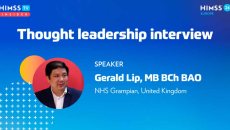
Dr. Gerald Lip of the U.K.'s NHS Grampian says that using AI algorithms has allowed a shrinking pool of radiologists to work more efficiently and provide test results in three days, instead of two weeks.
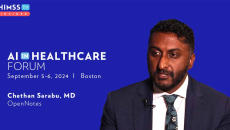
Large language models are "enabling a new level of patient empowerment" by helping people understand clinical notes, navigate insurance claims and much more, says Dr. Chethan Sarabu, AI and informatics strategist at OpenNotes.

"This is truly a revolutionary system, allowing us to take operative navigation to a new level, tracking implants and change in alignment in real time with no radiation with a relatively straightforward camera," says a top spine surgeon.

What does the next year in AI and genAI look like? How can and must AI help with the clinician shortage? Is fearmongering detrimental to AI's future? Greg Miller, vice president of business development at Carta Healthcare, has the answers.

Cancer treatment research can now rely less on Western datasets.

A look at the ethics that provider organizations must consider when building out responsible models and equitable healthcare experiences, according to Oneil Rego and Ilana Golbin Blumenfeld, two experts at consulting giant PwC.

Also, Breast Cancer Foundation New Zealand is set to launch a national programme ensuring cancer therapy adherence.
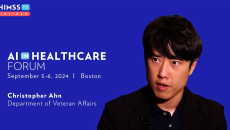
At the VA, automation is helping innovate troubleshooting, maintenance other med device management tasks, says Christopher Ahn, biomedical engineer supervisor at the U.S. Department of Veterans Affairs in Dayton, Ohio.
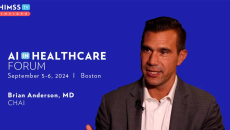
The Coalition for Health AI is helping chart the way forward with its draft framework for responsible deployments and other critical guidance. CHAI's cofounder Dr. Brian Anderson talks model integrity, assurance labs, alignment and more.