Patient Engagement
Mayo Clinic and IBM Watson Health have announced the results of a cutting-edge project putting the supercomputer to work for patient matching: Watson brought in more patients than before to participate in recent breast cancer clinical trials.
Only 5 percent of patients with cancers participate in clinical trials nationwide, according to Mayo Clinic officials, who noted that that low enrollment makes for many clinical trials that are slow to finish or not completed. That delays advances in research and results in less access to better therapies.
[Also: Next-up for EHRs: Vendors adding artificial intelligence into the workflow]
What’s more, matching and enrolling patients in appropriate trials has proven to be a time-consuming, manual process.
“Novel solutions are necessary to address this unmet clinical need, advance cancer research and treatments, and, in turn, improve the health outcomes of patients,” Tufia Haddad, MD, a Mayo Clinic oncologist, said in a statement.
Watson for Clinical Trials Matching is programmed to accurately and consistently match patients to clinical trials for which they might be eligible, so that healthcare providers and patients can consider appropriate trials as part of a care plan.
Mayo Clinic implemented the system in July 2016 in its ambulatory practice for patients with breast cancer. In the 11 months after implementation, there was about an 80 percent increase in enrollment to Mayo’s systemic therapy clinical trials for breast cancer. Also, the time to screen an individual patient for clinical trial matches was lower when compared with traditional manual methods.
“This has enabled all patients to be screened for all available clinical trial opportunities,” Haddad noted.
Based on the initial testing phase, Mayo and IBM agreed to continue developing the system to include trials for other types of cancer and aspects of cancer care beyond medical therapies, such as surgery, radiation and supportive care.
Watson is programmed to support clinical trial matching for breast, lung and gastrointestinal cancers, and training on trials for additional cancer types is underway.
Twitter: @Bernie_HITN
Email the writer: bernie.monegain@himssmedia.com
In his first State of the Clinic, Cleveland Clinic CEO Tom Mihaljevic, MD, called on the health system’s 57,000 employees around the world to focus on caring: “how we care for patients, care for each other, care for the organization, and care for our communities,” he urged.
Mihaljevic succeeded Toby Cosgrove, MD, who held the top executive position for more than 12 years. Mihaljevic joined Cleveland Clinic in 2004 as a cardiothoracic surgeon, served as CEO of Cleveland Clinic Abu Dhabi since 2015 and took over the post here in the U.S. on January 1, 2018.
In his speech, Mihaljevic called on staff to continue to improve healthcare by best using new technologies, notably artificial intelligence and the latest in data analytics as well as digital platforms.
[Also: With patient experience, 'We need to dream bigger,' Cleveland Clinic leader says]
Mihaljevic also revealed new initiatives for 2018, including efforts to improve patient safety and reduce caregiver and physician burnout.
Cleveland Clinic reduced readmissions, improved care coordination, and increased hand-washing among caregivers in 2017. “We have a right to be proud of our work in patient experience,” he said. “It is inseparable from quality. But we need to go further.”
He said Cleveland Clinic would continue to bolster its culture of safety, become an ultra-high reliability organization, and he promised to set bold goals, particularly regarding hospital-acquired infections and serious safety events.
[Also: Cleveland Clinic's remote revenue cycle program saves money and makes employees more productive]
A recent survey within the Cleveland Clinic, for instance, found that more than one in three physicians met the criteria for burnout.
“We are here for patients first,” Mihaljevic said. “But we can’t succeed unless we take care of ourselves.”
To that end, he announced that Cleveland Clinic has established the new Office of Caregiver Experience to address wellness, burnout and career development.
Mihaljevic also praised Cosgrove’s achievements and his legacy.
Today, Cosgrove has a new title: Executive Advisor and former CEO and President. He has been with the Cleveland Clinic for more than 40 years – as cardiac surgeon, department chair and ultimately CEO.
Under Cosgrove’s leadership Cleveland Clinic saw increases in revenue, patient volume, research funding and community benefit.
Mihaljevic delivered the State of the Clinic speech late last month.
Twitter: @Bernie_HITN
Email the writer: bernie.monegain@himssmedia.com
The post-EHR era is well and truly here, but EHR-centric challenges are still as thorny as ever.
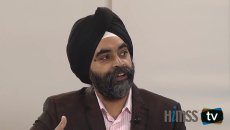
Gurpreet Singh, partner and U.S. Health Services sector leader at PwC, explains the concept of a ‘digital twin’ to help patients make better choices, any shares his ideas about many other ideas of consumer-based tools for healthcare.
Patients and physicians both are ready to engage with one another using digital tools, according to a new Ernst & Young national survey released at HIMSS18 this week.
The survey found 54 percent of consumers said they are comfortable contacting their physician digitally and further expressed interest in using technology such as at-home diagnostic testing (36 percent), using a smartphone or connected device for information sharing (33 percent) and video consultations (21 percent).
There is widespread agreement among physicians that digital technologies and data sharing will contribute effectively to the overall well-being of the population, the survey found. And 83 percent of physicians believe that increased patient-generated data from connected devices would benefit the overall quality of care and enable more personalized care plans.
Further, 66 percent of physicians said that increased use of digital technologies would reduce the burden on the healthcare system and its associated costs, and 64 percent think it would help reduce the burden on doctors and nurses and have a positive impact on the critical issue of burnout, the survey said.
“The health sector today is ripe for disruption, and these findings reinforce the need for organizations to rethink how and where care is delivered to consumers,” said Jacques Mulder, U.S. health leader at Ernst & Young. “Both consumers and physicians are empowered by emerging technology and are hungry for better, more connected experiences. This demand paves the way for nontraditional players to make an impact on the industry, and is another indicator that health in entering an era of convergence.”
Creating incentives for data sharing is a critical piece of the puzzle, the survey discovered. While only 26 percent of consumers are interested in sharing lifestyle information with their physician, those numbers make a big jump when you add in incentives. Consumers said that reduced waiting times (61 percent) and cost savings (55 percent) provided the biggest incentives to increase digital engagement with their physicians.
What’s more, despite hesitation in sharing dietary and exercise information, 26 percent of consumers indicated that the ability to receive tailored diet and exercise plans would also encourage engagement with digital technology, the survey found.
“What we see from these results is that consumers and physicians are ready for increased digital interaction,” said Rachel Hall, principal and advisory health digital offering leader at Ernst & Young. “If you look at the health sector today, we see a lot of point solutions designed to address a particular aspect of health or wellness. While this is a great start, what we are missing are solutions to support health and disease management on a broader level.”
To find success in this landscape, the industry needs more interoperable data that is source agnostic, the right analytic tools, and a focus on consumer-centric designs, she added.
The consumer portion of the survey polled 2,455 U.S. consumers aged 18 and older nationwide. The physician portion of the survey polled 347 physicians nationwide.
.jumbotron{ background-image: url("http://www.himss.org/sites/himssorg/files/u351641/HIMSS-sign5-jumbotron.jpg"); background-size: cover; color: white; }
.jumbotron h2{
color: white;
}
Full HIMSS18 Coverage
An inside look at the innovation, education, technology, networking and key events at the HIMSS18 global conference in Las Vegas.
Twitter: @SiwickiHealthIT
Email the writer: bill.siwicki@himssmedia.com
PerSoN Clinic unwraps an engagement platform; Payfone and higi partner around kiosks; and Acxiom debuts its Patients Insights Package.
The new self-service program will offer robust APIs to encourage creation of new tools for a space that's often underserved by technology.
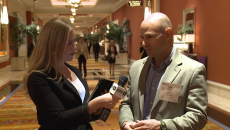
Kent Ivanoff, CEO of VisitPay, explains how consumerism has made it important for hospitals to have a good platform for collecting patient revenue.

Patient advocate Amanda Greene and Max Stroud of Galen Healthcare want to empower patients to shape their own experiences as consumers.
In the wake of the Cambridge Analytica - Facebook data scandal, researchers set out a roadmap for the health and science community to restore the public's trust in big data.