EMEA News

SPONSORED
 |
01:00 am |
January 03, 2023
|
01:00 am |
January 03, 2023
|
01:00 am |
January 03, 2023
Clinician burnout is a worldwide concern, leading to lost productivity and increased costs. As technology evolves, the use of AI, paperless documentation, and automation tools can have a positive impact on healthcare systems.
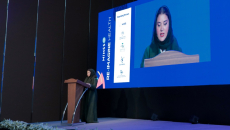
A series of themes and proposals to help advance the digital transformation of healthcare in the Middle East and North Africa were made during the final session of the 2022 HIMSS Middle East Health Conference & Exhibition.

SPONSORED
 |
01:00 am |
November 29, 2022
|
01:00 am |
November 29, 2022
|
01:00 am |
November 29, 2022
IQVIA is a research and analytics partner in the Dubai Health Authority's EJADAH programme that places patient centricity at its core.

SPONSORED
 |
01:00 am |
November 23, 2022
|
01:00 am |
November 23, 2022
|
01:00 am |
November 23, 2022
The pandemic accelerated the adoption of digital health solutions and devices. But it also exposed the cybersecurity vulnerabilities of increasingly connected hospital systems. Digital leaders in hospital organizations must now demand data security assurance from technology providers.
During this morning keynote at the 2022 HIMSS Middle East Health Conference & Exhibition, experts will share insights on their initiatives for health justice – with a spotlight on the Middle East.

This closing keynote session at the 2022 HIMSS Middle East Health Conference & Exhibition aims to cover key strategies on how to train, recruit, and retain the next generation of healthcare workers in the region.

This afternoon session of day one of the 2022 HIMSS Middle East Health Conference & Exhibition will explore how cross-collaboration can improve various aspects in digital healthcare.

Clinicians in the region will have secure access to radiology and diagnostic images through the Malaffi HIE platform.

The two organizations have signed a memorandum of understanding to work together to bring paperless healthcare to the 53 member states of the WHO's European region.

SPONSORED
 |
06:35 am |
September 28, 2022
|
06:35 am |
September 28, 2022
|
06:35 am |
September 28, 2022
The complexity of using EMRs and the risk of adverse drug events (ADE) globally can make it even harder to deliver the best patient care.
The problem is getting worse as patients today are presenting with ever-increasing degrees of complexity, co-morbidities, and medication regimes.
As many as one in ten hospitalisations in countries in the OECD (The Organisation for Economic Co-operation and Development) may be caused by a medication-related event and as many as one in five inpatients may experience medication-related harm during hospitalisation.
Advanced medication decision support in the workflow could help empower clinicians at all touchpoints of the care continuum to make better treatment decisions.
Screening for potential issues
A new medication decision support system has been launched in Italy and Belgium which aims to reduce adverse drug events by connecting patient information to screen for potential issues.
Medi-Span Clinical APIs has been designed to deliver medication alerts in electronic medical record (EMR) systems to help improve patient care. It alerts clinicians to potential medication errors and contra-indications at precise points in treatment.
Wolters Kluwer, Health, who launched the solution, said they recently surveyed more than 300 clinical leaders across 39 countries and found that 95% of respondents said it would be helpful to have a safety screening solution. However, only 44% of respondents actually had a solution, which was integrated within their EMR to support medication safety.
Christian Cella, international vice president for clinical effectiveness at Wolters Kluwer, Health, commented, “We can’t forget to care for our caregivers. Everything we do to help clinicians reduces their cognitive load, increases their focus, and improves efficiency, which not only helps care teams, but leads to better quality care.
By introducing the next generation of medication decision support in Italy and Belgium, we can help them to raise meaningful alerts at the right time and place, reduce errors, and enhance the clinician experience.”
Reduced alert fatigue and increased adoption of best practices.
According to Wolters Kluwer, customer surveys* showed that users of Medi-Span reported that there was a reduction in alert fatigue and increased adoption of best clinical practices. The information services’ company added that their customers said this solution also enabled them to earn new international accreditations such as HIMSS EMRAM 6 and 7.
Taiwan’s National Cheng Kung University Hospital carried out an analysis of alerts triggered by the Medi-Span system, for Wolters Kluwer, in 2021. The study found that the new system delivered 21% fewer alerts, even though it captured more severe potential adverse drug events, than another medication alerting system. The analysis also revealed that using Medi-Span reduced hospital costs over a five-month period, as well as increasing hospital capacity.
To learn more about Medi-Span medication decision support click here.
###
Medi-Span Clinical APIs is a CE-marked medical device. Before use, please carefully read the warnings and instructions for use.
*data on file