
HIMSS TV
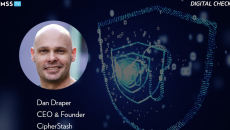
Dan Draper, founder and CEO of CipherStash, explains data protection advancements leveraging heuristics and encryption-in-use technologies. He warns of a looming Y2K-like race to update software for quantum safety.
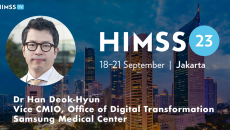
Dr Han Deok-Hyun, vice CMIO of the Office of Digital Transformation at SMC, shares the hospital's approach to achieving world-class healthcare analytics.
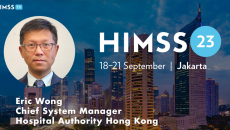
Eric Wong, chief system manager of Hospital Authority Hong Kong, says flexibility has become necessary in keeping hundreds of clinics and hospitals on track with digital transformation.
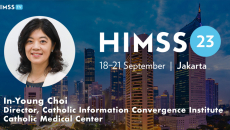
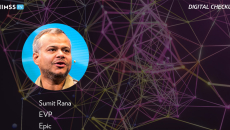
Sumit Rana talks artificial intelligence helping providers respond to patients' questions, assist with medical coding and generate progress notes. And he points out how AI sometimes can be more empathetic than people.
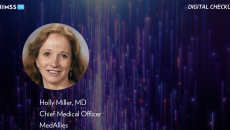
Dr. Holly Miller, chief medical officer at MedAllies and member of the Sequoia Project’s Data Usability Taking Root initiative, is working to advance interoperability and make fragmented and incomplete data more usable for clinicians.
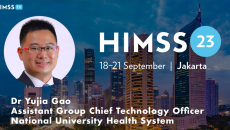
Dr Yujia Gao, assistant group CTO at the National University Health System, shares some developments in NUHS holomedicine research.
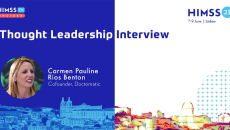
HIMSS23 Europe Startup PitchFest winner Doctomatic captures and assesses remote patient measurements using visual AI. Carmen Pauline Rios Benton, cofounder of the Spanish startup, shares the details.
Following its recent HIMSS Digital Health Indicator assessment – and ranking second globally in 2022 – Chang Gung Memorial Hospital is moving to new heights of digital maturity with confidence, says superintendent Dr Chien-Tzung Chen.
Netherlands-based Direct Diagnostics promotes in-home preventative testing via its highly scalable solution, says CEO and cofounder Elsemieke Hackenitz.