HIMSS TV

Peter Shen, head of the digital and automation business at Siemens Healthineers, shows how, and how healthcare can increase adoption of artificial intelligence – with appropriate guardrails in place for safety, transparency and ethics.
Thanks to machine learning, pocket-sized cardiac sonography can help any medical professional make real-time cardiac-care decisions in acute, field, EMS and rural settings, says UltraSight CEO and cofounder Davidi Vortman.
A project by Pauliina Ilmonen, mathematician at Aalto University in Finland, and her colleagues is emulating a zombie plague to gain insights into how an event like a pandemic or a mass disinformation campaign can spread.

Dr. Nele Jessel, chief medical officer of athenahealth, says bringing telehealth and other tools into the primary care setting destigmatizes mental health conditions and increases treatment.
SPONSORED
 |
11:37 am |
December 08, 2023
|
11:37 am |
December 08, 2023
|
11:37 am |
December 08, 2023
We need to focus on interoperability standards and engage patients in data governance, so we can improve care with a 360-degree view of the patient, according to Simon Rost, CMO of GE Healthcare.
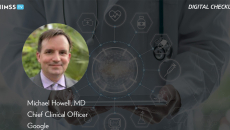
AI can improve health equity, according to Dr. Michael Howell, chief clinical officer at Google, who will discuss the evolution of the company's medically tuned LLM and make regulatory recommendations for the use of AI in healthcare.
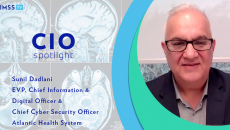
Ahead of his appearance at the HIMSS AI in Healthcare Forum, the chief information and digital officer, who also serves as CISO, offers some lessons learned from the health system's rollout of artificial intelligence across the care continuum.
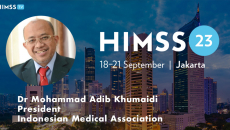
The association seeks more industry collaborations to further promote digital technology adoption among Indonesian health professionals, according to president Dr Mohammad Adib Khumaidi.
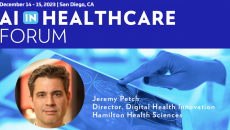
Companies must consider several correlations when developing artificial intelligence systems, says Jeremy Petch, Hamilton Health Sciences' director of digital health innovation. He'll discuss the key elements at the HIMSS AI in Healthcare Forum.
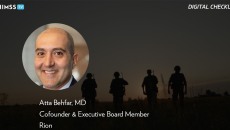
Thanks to a $2.4 million grant from the DoD, Rion is collaborating with the Mayo Clinic and the U.S. Army Medical Research Institute to study the company’s Exosome Product for service members. Dr. Atta Behfar, Rion CEO and cofounder, explains.