Videos
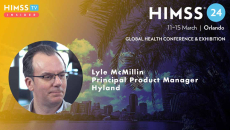
Hyland's recent survey with HIMSS Market Insights found that many healthcare organizations are still struggling to exchange patient data, even after moving to the cloud. Lyle McMillin, the company's principal product manager, unpacks those results.
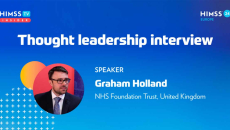
Graham Holland, deputy chief pharmacist at the Liverpool Heart & Chest Hospital NHS Foundation Trust, discusses positive results from the hospital's digital transformation, including a 44% reduction in medication administration incidents.
SPONSORED
 |
12:41 pm |
July 19, 2024
|
12:41 pm |
July 19, 2024
|
12:41 pm |
July 19, 2024
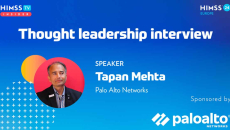
As the number of ransomware incidents against healthcare organizations increases, providers need to employ key strategies to protect patient data, says Tapan Mehta, health executive at Palo Alto Networks.

Plenful Founder and CEO Joy Liu says a massive labor shortage of pharmacy technicians, along with market and compliance challenges, have burdened pharmacists and left them with less time to do their work.
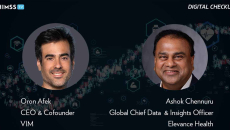
Providers and payers are scaling artificial intelligence to accelerate workflows, enhance patient care and unlock personalized medicine, say Oron Afek, CEO of Vim, and Ashok Chennuru, global chief data and insights officer at Elevance Health.
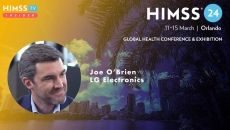
By partnering with health systems to support hybrid care models, long-term care facilities can mitigate staff shortages of staff and better manage available beds, explains Joe O'Brien, head of sales, digital health at LG Electronics.

Saurabh Gombar, adjunct faculty at Stanford Health Care and chief medical officer at Atropos Health, details a study analyzing five LLMs, including ChatGPT and Gemini, examining accuracy and efficacy of the models' output.

Zen Healthcare IT's interoperability platform creates a "gateway" for healthcare data exchange between technology vendors and customers, explains Marilee Benson, president and cofounder.

Eversana and the Digital Therapeutics Alliance analyze, map and report on reimbursement frameworks in Europe for digital therapeutics. Alberta Spreafico, SVP of health innovation at Eversana, explains.

Emmanuel Bilbault, cofounder and CEO of POSOS, says the company's AI-powered clinical support platform offers alternate drugs to prescribe to avoid interaction risk, rather than simply alert doctors of possible medication errors.