Videos

Four security experts discuss how recent cybercriminal activities shed light on the increasing need for better security, due to the severity of attacks and the need to protect valuable patient data.

Mix and mingle with the brightest minds in health and IT at HIMSS17, February 19–23, 2017 in Orlando. Experience five days of exceptional education, exhibition and networking to equip you with the resources and collaboration you need to continue to transform health and lives all year long.
Register Now for HIMSS17 in Orlando

(SPONSORED) When Dave deBronkart learned he had a rare and terminal cancer, he turned to a group of fellow patients online — and found the medical treatment that saved his life.
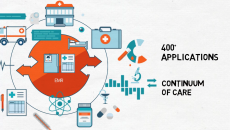
(SPONSORED) Prescription 1: Continuous Availability of All Applications Across the Care Continuum. Develop a disaster recovery plan that enables clinicians to provide patient care without disruption.

Many security breaches begin with en email that allows malware enters the organization healthcare institutions begin as a result of phishing. To combat this thread, Mayo Clinic initiated an institution wide No Phishing Campaign based on education and simulated phishing exercises for all employees.
Penetration or pen tests are an increasingly popular way to find the access points on a network that can be exploited by hackers. In his presentation at the Healthcare Privacy and Security Forum, Chris Crowley explains the value and the limits of these tests, and how to ensure that you can get the most benefit from a pen test.
A successful cyber-security program requires a comprehensive approach. Shenny Sheth talks about the management philosophy that Texas Children’s Hospital has taken to creating its blueprint for the successful implementation of a security program.
(SPONSORED) As the number of devices connected to a healthcare network continues to expand, so do the points of vulnerability. Many of these devices add new access points for malware that can threaten the overall security of the network. Isolation and containerization can be part of the solution.

By adopting best practices, IT managers can build their security strategy around a set of frameworks that have been proven to work. The IT Process Institute CEO talks about their approach to the challenge of selecting the best practices in cybersecurity.
Whether it's protecting against ransomware attacks, managing insider threats, implementing device management policies or convincing the C-suite to open its purse-strings, the role of a chief information security officer is a complex one.