Videos

Rosha Pokharel, CEO and founder of SolvDat, says it's key to consider the business case, the feasibility to build as it relates to data and adoption and, thirdly, whether you have the right skills and team in place.
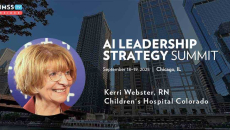
The health system is finding success with predictive models and LLMs and is "eager to understand and leverage" more advanced use cases, while ensuring they're "safe, secure, ethical and unbiased," says Chief Analytics Officer Kerri Webster, RN.
Attendees at the inaugural forum, focused on the healthcare C-suite, are pursuing different projects and are at different stages of artificial intelligence maturity. All are aiming to maximize their AI investments for true enterprise-wide value.
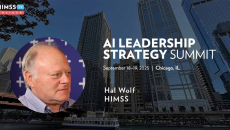
Change is on the horizon, and its time to start planning for it, says HIMSS CEO Hal Wolf, at the HIMSS AI Leadership Strategy Summit in Chicago. He describes some use cases, existing and emerging, that he's excited about.

Do provider organizations have contract protections against supply chain rate hikes due to tariffs? Ralph Keiser, CEO of ArcheHealth, digs into the details.

Pelu Tran, Ferrum Health's CEO, says a point solution approach for scaling health AI "doesn't really work when you're dealing with every possible disease, patient or service line" needing AI, and favoring one LLM may also limit future coding.

Collaborating on identity verification tech is making it possible for patients to go to TEFCA and get their records, says HealthEx CEO Dr. Priyanka Agarwal. She also weighed in on what's needed to rapidly scale Individual Access Services.

Using virtual care, clinicians can conduct follow-up appointments - transitional care when there's the risk of readmission - that benefit patients, says Dr. Matthew Thompson, an ER physician and the CEO of Telescope Health.
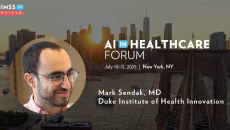
Dr. Mark Sendak, pop health & data science lead at the Duke Institute for Health Innovation, offers an update on the Health AI Partnership, and how it's offering technical assistance to help FQHCs and community hospitals bridge the digital divide.

Richard Staynings, chief security strategist at Cylera, says hospitals need better visibility into the various AI-enabled tools coming onto their networks, and the ability to track new traffic patterns, security vulnerabilities and privacy risks.