Videos

Fran Ayalasomayajula, president of global social impact organization Reach, says hospital-at-home approaches enable organizational efficiencies – but can also be a challenge for caregivers.

Investing in companies founded by entrepreneurs from historically marginalized communities is important, says Kaakpema "KP" Yelpaala, who adds that ensuring those individuals have a say in the organizations that receive funding is crucial.

Dr. Nigel Spier, OBGYN and team lead for ModMed OBGYN, explains how adaptive technology can comprehend how physicians manage patients, based on their training and guidelines, and free them up to spend more time with high-touch patients.

Tony Corkett, CEO of Cloud21, discusses how the company supported IT infrastructure and process improvements for the UK's National Health Service, and discusses what's next for cybersecurity and digital health.
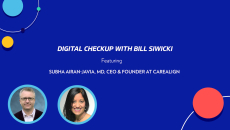
The technology can complement EHRs, reduce errors and enhance time management, explains Dr. Subha Airan-Javia, a hospitalist at University of Pennsylvania Health System and founder of CareAlign.

Competitors Humana, MultiPlan, Optum, Quest Diagnostics and UnitedHealthcare formed the alliance to unlock the potential of distributed ledger technology. Michael Kim, CIO at MultiPlan, discusses their work.
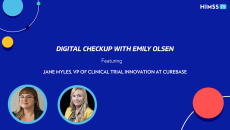
It's important to be creative when overcoming obstacles to access to wider improvements in trial design and participation, says Jane Myles, VP of clinical trial innovation at Curebase.

Josh Scales, founder and CEO of Uniti Health, explains new legislative proposals that could put organizations ahead of pre-pandemic levels, even if reimbursement is a barrier.
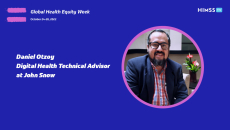
Daniel Otzoy, digital health technical advisor at John Snow, Inc., explains how increasing interest and investment are contributing to a "golden age of digital health."
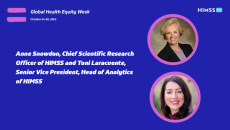
Anne Snowdon, chief scientific research officer at HIMSS, and Toni Laracuente, global head of analytics at HIMSS, say digital transformation must enable more equitable care for patients worldwide.