Telehealth
Daniel Barchi has taken the reins as chief information officer at NewYork-Presbyterian, where he will oversee a new telehealth program set to launch this year as well as the development and implementation of technology across the health system.
Healthcare practices used on the International Space Station are serving as model for caring for people in some of the most deprived and isolated parts of the world, according to an article published last month in the World Health Organization.
Several of the systems used to ensure healthcare for astronauts working in cramped and isolated space station have been studied and implemented in undeveloped areas, Alfred Papali, MD, wrote in “Providing healthcare in rural and remote areas: lessons from the International Space Station.”
Papali, with the Division of Pulmonary and Critical Care Medicine at the University of Maryland School of Medicine, shows how the space station astronauts ensure their health while circumnavigating the globe in space by employing three essential services — task-shifting, point-of-care ultrasound and telemedicine services.
NASA has mitigated the risk of medical emergencies aboard the space station by training the crew medical officer and by using on-board ultrasound and an Earth-based telemedicine consultation. Space flight, though, presents several challenges, such as engineering and space constraints, limited bandwidth for data transmission, a lack of advanced diagnostic equipment and the absence of a physician. How space station crewmembers overcome these challenges may present a model to Earth-bound programs.
For space flight task-shifting, a crew medical officer receives about 60 hours of preflight training, similar to the level of a paramedic in the United States. The WHO cited task-shifting as a key element in cost-effective access to antiretroviral medications, and nurse practitioners and physician assistants are providing a wide variety of medical services where doctors are scarce, Papali wrote.
Additionally, NASA-funded studies in remote locations around the world have had a direct impact on the development of the space station’s ultrasound program.
Likewise, the space station’s extensive use of telemedicine is leading to advances of the technology on Earth. Medical data and ultrasound images are routinely transmitted to ground-based flight surgeons for diagnostic and training purposes. Data transmission is not continuous, however, and as in the developing world the connection can be very slow or completely absent. Judicious use of limited technological resources is necessary in any location, Papali wrote.
To address this issue, just-in-time educational modules have enabled crewmembers to perform complex ultrasound examinations despite the time lag in communications between the space station and the ground.
“These modules could be adapted to terrestrial environments with limited connectivity,” Papali explained. “In addition, NASA has tested virtual remote guidance (i.e. recorded instructional videos for use by crew members using wearable technology) as a means of overcoming connectivity barriers; this technique will soon be used in Haiti to study remote guidance of endotracheal intubation.”
It is worth noting also that health services developed and used in space differ in important ways from those used on Earth.
“The great challenge for emergency care on Earth will be whether such services can be developed across diverse and fragmented health systems in a coordinated fashion to optimize outcomes, reduce costs and minimize duplication,” Papali wrote.
Nonetheless, the services developed for the spaced station can show the way from continued innovation in health services.
Twitter: @HealthITNews
Platform mimics an in-person interaction between clinician and patient, company executives said.
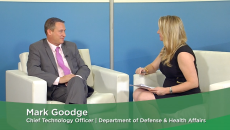
Mark Goodge, CTO for the Department of Defense & Health Affairs, shares his thoughts on the 2015 HIMSS Connected Health Conference and how the DOD is planning to utilize emerging technologies to improve healthcare.
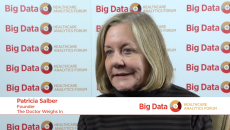
Patricia Salber, MD, founder and CEO of Health Tech Hatch and host of the popular blog "The Doctor Weighs In," reflects on discussions from the 2015 Big Data & Healthcare Analytics Forum in Boston.
Meridian Health, the New Jersey health system, will launch telehealth services in early 2016 and has enlisted Lewisville, Texas-based Teladoc for round-the-clock access to its network of licensed physicians.
Demand and technological capabilities are driving change, Cathy Riesenwitz, a researcher with software firm Capterra, told Healthcare IT News.
Kaiser Permanente Ventures is betting big on telemedicine, investing $10 million in Vidyo, a visual communications company that integrates high definition video communications into electronic health record systems and workflow, Vidyo announced Monday.
Every year HIMSS calls on Congress with requests specific to advancing health IT. We check in to see what happened since 2014.
A pilot program at Vanderbilt University and VA found that patients, nearly three-quarter of whom preferred telehealth, received the same quality of care via video and phone as those who came into the hospital.