Telehealth

Dr. Ramadan AlBlooshi, chief regulatory officer at the Dubai Healthcare City Authority in the UAE, says the treatment, prescription and follow-up process needs to improve for telemedicine to be seen as a success, as "telewellness" will have a major impact.
At HIMSS20, AT&T's global director of strategy and innovation will describe the advantages of 5G cellular and edge computing, and describe some of the best healthcare use cases for the next-gen communication specs.
It's hard for me to believe, but I’ve been at Penn Medicine for 13 years. There has been a remarkable amount of change, growth, and learning that has occurred both within my organization and in myself during this time.
Upon entering a new calendar decade, I thought I'd share a few reflections on past achievements, lessons learned – and thoughts to pave the way forward in setting new goals to keep trailblazing on the technology landscape.
I find that it’s important as a leader to express gratitude. Doing so creates a high achieving mentality at work and builds connectedness, perhaps even solidarity, which can pay dividends and even transform the organization toward increased productivity.
The Information Services achievements that I am most thankful for at my organization include these key items:
First, I’m thankful that we successfully implemented our integrated electronic health record. This achievement significantly enabled the continuity of patient care and seamlessly unites our patients’ data in the ambulatory, inpatient and homecare settings.
Second, I’m thankful for the high performing Information Services team that gives 100% each day - dedicated toward achieving our departmental mission aligned to support our enterprise goals. By building a strong team vision, culture, and establishing solidarity, we have achieved a 96% retention rate over the past seven years.
Next, I’m thankful for Penn Medicine’s leadership that participates in our information services governance, sets institutional priorities and provides our teams with the resources necessary to continue to be leaders in health care delivery.
I’m also thankful for our vendor partners whose employees develop some of the most functional and reliable technology and software solutions to assist our caregivers in their daily operations.
Lastly, I’m most thankful for all of my business partners in the healthcare IT industry that work collaboratively with me and members of the Information Services team to design, develop and implement solutions that meet the institution’s objective to deliver world class patient care, education and research.
Through these contributions and collaborations, my organization has changed in ways we never dreamed of at the beginning of this past decade.
As we look forward to the next decade, I can only imagine the changes that will take place. I foresee significant advancements occurring in mobility, imaging, telemedicine, virtual reality, 5G/6G, artificial intelligence, data privacy and security, genomic sequencing and translational research.
From my perspective, these are just a few of the factors that will shape the next decade:
In the near term, Penn Medicine’s Information Services team is focusing our efforts on driving more value out of the technology assets in which we have made investments.
Further optimizing our electronic health record to be more intuitive and useful for our clinicians;
Expanding efforts to further engage our patients in the management of their care;
Delivering timely analytics to decision makers across the enterprise to improve on-the-ground decisions and drive desired behaviors;
Integrating our research and patient care efforts to deliver personalized patient care solutions;
Ensuring that we engage our most valuable assets, our employees, with the most up-to-date technologies to enhance their career opportunities.
The next decade is sure to bring an accelerated rate of change to the healthcare industry. Like the metamorphosis that has taken place in other industries, healthcare technology will be the catalyst for provider organizations to succeed in the ever changing world of healthcare.
Mike Restuccia is the chief information officer of Penn Medicine.
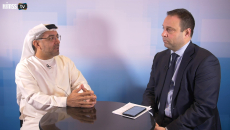
All stakeholders need to work collaboratively to provide optimum and personalized patient care, says Dr. Ali Abdulkarim Al Obaidli, group chief academic affairs officer at Abu Dhabi Health Services.

Conveying compassion, or "digital empathy," is possible through such innovative technologies as virtual coaching and chatbots – if consumers trust the healthcare source, says John Sharp, Personal Connected Health Alliance at HIMSS.
In 2019, it offered more than 2.6 million telehealth episodes of care to more than 900,000 veterans. At HIMSS20, a VA leader will show how this, plus innovations such as My HealtheVet and Blue Button, is boosting veterans' patient experience.
While there is a large and growing market for remote patient monitoring technologies, with particular benefits for the older population, simplification of connection technologies – Bluetooth for one – will be key to the broader adoption of RPM in 2020.
The vast majority of hospitals and health systems – 88 percent – have invested in or plan to invest in remote patient monitoring technologies as part of their transition to a value-based care model, according to a 2019 Spyglass Consulting report.
Smartphones and tablets are among the mobile technologies in focus, which can be combined with telehealth video conferencing and healthcare wearables, as well as the deployment of electronic health record-based patient portals.
"There are now numerous RPM solutions out there, including a select few that have had very positive outcomes toward meeting the quadruple aim – improved patient experience, improved clinical experience, better outcomes and lower costs," Eric Rock, CEO of Vivify Health, a provider of connected healthcare delivery solutions, told Healthcare IT News.
He noted there has also been a shift to greater commitment to value-based care and improved home care, especially from government-led initiatives which new RPM reimbursements have helped to drive.
"As we see it, 2019 was kind of the trial run or dress rehearsal for RPM reimbursement; 2020 will be the culmination of all those efforts," he said. "It is all these waves that will combine in a perfect storm for RPM in 2020."
He noted, however, that a basic, narrowly focused app that only connects to a limited number of devices has been shown to be insufficient to accomplish large-scale cost reductions and improved health.
"What's necessary is a multi-condition platform driven by engaging content and a clinical backend that scales population health delivery," Rock said. "We need apps that can handle multiple conditions across a wide range of devices to fulfill the true potential of RPM while remaining affordable."
He said those devices must also have intelligence built into them to help filter all this incoming data and guide providers or care coordinators to activities or events that requires their attention – otherwise, the data becomes noise to providers and it gets ignored, similar to alert fatigue with EHRs.
"All of this must also be connected to the existing healthcare infrastructure including security and communications standards such as HIPAA and HL7," Rock explained. "If we can do all of that, and I believe it's possible in 2020, we will change healthcare – and change lives."
Harry Soza, CEO of CAREMINDr, Silicon Valley tech company that partners with health plans and providers to advance population health management through RPM, said he sees potential for "significant growth" in RPM in 2020.
"We have clients that are beginning rapid, large scale expansion of their RPM programs after having run smaller pilots during 2019," he said. "This type of expansion absolutely requires specialized monitoring systems, because RPM care is fundamentally different from the traditional methods of providers interacting with patients."
Soza said RPM requires a "fundamental change" in how a provider system organizes itself and its relationships with patients, because it is non-face-to-face, and requires a patient to become a responsible, engaged partner with their doctor – which brings new types of challenges related to the business of delivering care.
"Many of the barriers hindering expansion of RPM programs can be solved through a blend of business management and new technology approaches," he explained. "Acceleration in adoption can only occur when the systems being implemented are easy for provider groups to adopt, but also comprehensive as related to their business needs. This is the largest challenge in the RPM industry today."
Nathan Eddy is a healthcare and technology freelancer based in Berlin.
Email the writer: nathaneddy@gmail.com
Twitter: @dropdeaded209
At HIMSS20, they'll show how RPM introduces new security risks outside the walls of the hospital – and show how controls can be implemented to help safeguard patients’ privacy as they're cared for in the home.