Population Health
SPONSORED
 |
04:00 am |
February 23, 2016
|
04:00 am |
February 23, 2016
|
04:00 am |
February 23, 2016
(SPONSORED) The most common complaints about healthcare in the United States: that it’s not accessible to everyone because it's not affordable, and that it’s not navigable because it's fragmented. Accountable care organizations (ACOs)--are addressing these complaints head-on.
Healthcare organizations are making big investments in population health and patient engagement platforms as they prepare to move past meaningful use and toward value-based reimbursement, according to "The Big Mega HIT Purchasing Report" released Monday by market research firm peer60.
Electronic health records remain core to healthcare IT, according to the report, which gathered 567 responses from CEOs, CIOs, nursing and financial leaders and others with purchasing authority at hospitals and medical practices. However,many customers are still dissatisfied with their products.
Projected EHR replacement rates for 2016 show 23 percent of health providers (inpatient and outpatient combined) planning to look for new vendors, according to peer60.
[Also: Hospitals keeping close eye on revenue cycle vendors]
Still, "population health and patient engagement are the hottest areas by a wide margin," wrote peer60 executive vice president Chris Jensen in the report. "It’s really no surprise these two segments continue to lead the way among hospital IT upgrades considering their impact on successful migration to value-based care and value-based purchasing."
As for pop health, peer60s sees some stabilization in contracting plans. In 2015, roughly 25 percent of providers were certain they'd keep their population health vendor; in 2016, that amount has doubled.
"The pressure is on for vendors that have not already made their mark in this market because they’re about to be squeezed by increasing renewal rates and a declining pool of hospitals that have not already adopted," said Jensen.
[Also: New trends ahead for imaging informatics]
But when it comes to patient engagement, authors see the opposite. "More enterprise vendors are capturing more of the minds of providers, while interest in the best of breed crowd is beginning to dwindle," Jensen said.
Other big purchasing trends are also unsurprising. Data security, enterprise analytics and revenue cycle management are all in play. Security technology, especially, has seen a big jump in provider interest.
"In 2015 it was at the bottom of the list of top IT priorities and placed third this year," said Jensen. "Since this is not a growth market with 90 percent of hospitals already employing a true data security solution, the jump in interest in this area likely means the replacement market for more robust solutions in this very critical segment is heating up.
Twitter: @MikeMiliardHITN
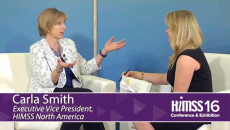
Carla Smith, Executive Vice President at HIMSS, highlights the major themes at the upcoming HIMSS Annual Conference and Exhibition in Las Vegas, including the the value of health IT and cybersecurity.
Watch more video coverage of HIMSS16
The healthcare industry is awash in data. But how can we best turn it into actionable information?
Hackensack University Medical Center to share tips for bolstering medication administration at HIMS…
Hackensack University Medical Center is tapping new technologies to achieve more effective medication adherence, according to Hackensack UMC’s director of pharmacy Nilesh Desai.
Hackensack UMC has been an early adopter of technologies and processes to advance medication safety and nurse workflows, Desai explained, along with interoperability between automated dispensing cabinets and EHRs.
[Also: 11 essential quotes from notable HIMSS keynotes]
Nurses are responsible for interacting with the automated medication dispensing cabinets, and the time they spend at the cabinets can be reduced significantly via more interoperable systems, for instance.
Desai will discuss the hospital's progress in this realm during a HIMSS16 session titled “Impact of an ADC System on Medication Administration.”
See all of our HIMSS16 previews
Medical administration systems must be able to address patient-specific medications and offer robust inventory and data management processes, Desai said.
Hackensack UMC tapped Omnicell, a provider of medication and supply management solutions and analytics software for healthcare facilities, to deliver automated medication management solutions throughout the 775-bed hospital.
Twitter: @HealthITNews
This story is part of our ongoing coverage of the HIMSS16 conference. Follow our live blog for real-time updates, and visit Destination HIMSS16 for a full rundown of our reporting from the show. For a selection of some of the best social media posts of the show, visit our Trending at #HIMSS16 hub.
All but seven U.S. states have either passed or are working on legislation that would establish a state-sponsored, all-payer claims database – and that’s among the reasons these databases are in the spotlight for their promise to improve the way providers and insurance companies manage patient populations.
This year at the HIMSS16, in fact, John Freedman, MD, president of Freedman Healthcare, and Linda Greene, vice president of Freedman Healthcare, will lead a session intended to shed light on what APCDs are and where they’re headed in the future.
See all of our HIMSS16 previews
APCDs as “large-scale databases that systematically collect medical claims, pharmacy claims, dental claims (typically, but not always) and eligibility and provider files from private and public payers,” said officials at the Robert Wood Johnson Foundation in a recent report. “States with APCDs are responding to a need for comprehensive, multi-payer data that allows states and other stakeholders to understand the cost, quality, and utilization of health care for their citizens.”
“While enormous attention is focused on EHRs and the health record data they contain – deservedly so – the other data world of claims data has been quietly creating applications for public health, price transparency, performance improvement, population health management and health services research,” Freedman said.
[Also: 21 awesome photos from past HIMSS conferences]
Instances of all-payer claims databases, in fact, have tripled in the past decade.
“The impacts of APCDs on healthcare are just starting,” he continued, “and they will be profound.”
The session,“Implications of Expanding State All Payer Claims Databases,” will be held on March 3 from 1 - 1:30 p.m. in the Sands Expo Convention Center.
Twitter: @HealthITNews
This story is part of our ongoing coverage of the HIMSS16 conference. Follow our live blog for real-time updates, and visit Destination HIMSS16 for a full rundown of our reporting from the show. For a selection of some of the best social media posts of the show, visit our Trending at #HIMSS16 hub.
IBM executives say the purchase adds not only a massive repository of health data to the Watson Health Cloud, but also an extensive client roster to IBM's Watson Health unit.
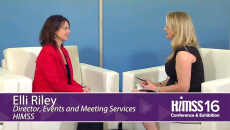
Elli Riley, Director for Events and Meeting Services at HIMSS, offers a brief overview of what attendees at HIMSS16 can expect from educational sessions to the expansive exhibit floor.
Watch more video coverage of HIMSS16
A leading topic or two seem to have emerged at every HIMSS Annual Conference. What do you think will lead this year?
Only a few days remain to submit speaker and session proposals for the Healthcare IT News and HIMSS Big Data & Healthcare Analytics Forum, which will be held in San Francisco June 14 and 15.