Population Health

Mikko Vasama, general manager of Health Systems Nordics at Philips, says training, education and access to technology for patients are imperative, especially when working within a publicly funded healthcare system.
As more than 200 health systems have signed on with the patient empowerment movement, population health, patient safety and quality improvement gains are apparent.

By fusing together health baselines with daily habits of patients, Syncmed Informatics' Niña Health app generates preventive programs that help reduce health insurance utilization and costs, says CEO Deo Dumaraos.
The Department of Veterans Affairs and Verizon are teaming up to offer veterans who are customers of the telecommunications giant unlimited access to department's VA Video Connect telehealth app.
WHY IT MATTERS
The platform connects veterans with their health care team using encryption to ensure a secure and private session, and users can then participate in video appointments or engage with health professionals using the built-in chat feature.
The partnership gives vets access across Verizon's nationwide 4G LTE network without incurring data charges. They can visit the VA Video Connect test site on their mobile device to test whether their device is compatible with the platform.
Customers using devices running Apple's iOS software can download the app via Apple's App Store, and for all other users, a telehealth session launches automatically after a user selects an emailed session.
The app is just one of several available from the VA, including an online scheduling application and an "Ask a Pharmacist" app, along with a variety of apps targeting mental health and wellness.
THE LARGER TREND
Telehealth is set for a major expansion in the U.S. This past month the Federal Communications Commission announced the agency would vote to advance a $100 million Connected Care Pilot Program, enabling telehealth expansion for low-income Americans nationwide, including veterans and others in medically underserved areas.
The partnership with Verizon comes as the VA navigates a complex digital transformation, including the $16 billion implementation of the Cerner electronic health records system, which is slated to go live across care sites by 2028.
However, the lack of interoperability between the Department of Defense and VA remains a major stumbling block, which the two entities hope will be smoothed through the creation of a special office, the Federal Electronic Health Record Modernization office, to help centralize decision-making.
Further complicating matters was the first House VA Subcommittee on Technology Modernization hearing, held in September 2018, which revealed that officials and congressional members are not on the same page when it comes to governance and EHR interoperability.
ON THE RECORD
"VA's telehealth app for streaming live video sessions between patients and health care providers is another testament to our shared journey to fully integrated, seamless access to health care for our Veterans, no matter where they live," VA Secretary Robert Wilkie said in a statement.
"Regardless of whether they live in city centers or rural areas, Veterans should be able to access the VA's telehealth resources," added Mike Maiorana, senior vice president of public sector for Verizon.
Nathan Eddy is a healthcare and technology freelancer based in Berlin.
Email the writer: nathaneddy@gmail.com
Twitter: @dropdeaded209
The money will help Atlanta University Center Consortium Data Science Initiative improve education in healthcare analytics at historically black colleges and universities.
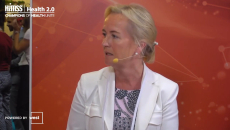
Cancer patients who used digital solutions to stay connected to their caregivers and report symptoms lived 6-7 months longer, says Dr. Johanna Mattson, director of Comprehensive Cancer Center at Helsinki University Hospital.
As hospitals and ambulatory sites grapple with the challenges of quality improvement, value-based care, cybersecurity and more, the size and shape of the workforce is changing as technology and imperatives evolve.

Koen Kas, founder of Healthskouts, says the aim is to "die young, but as late as possible" by utilizing digital technology to remove barriers and offer patients new experiences to make healthcare delightful.
German pharma giant Bayer, in partnership with NUS Enterprise, the entrepreneurial arm of the National University of Singapore (NUS), recently launched the Healthy Hearts, Healthy Aging Asia Pacific Report at Innovfest Unbound 2019. The report examines the cardiovascular (CV) health imperatives aligned with population aging in the Asia Pacific, and highlights the important shift in the region’s health systems from a traditional acute care model to one with an increased focus on preventive, value-based care.
Across the Asia Pacific region, socio-economic, geographic, demographic, and ethnographic differences create unique challenges for each country when dealing with the growing impact of CVD and aging. Experts in CVD and health policy from across eight countries (i.e. Australia, South Korea, Taiwan, Singapore, Malaysia, Thailand, Vietnam, and the Philippines) were consulted for the report to:
a) establish the current and predicted future burden of CVD on the region’s health systems,
b) examine the role of health innovation in addressing the unmet needs in CVD prevention and care, and
c) gather recommendations on how different stakeholders can collaborate to enhance the adoption of health innovation in the long-term preventive care of CVD patients.
FOUR BROAD AREAS OF NEED
The four areas identified for policy makers to focus on to address the challenges of aging and CVD are:
• The need for health systems to shift from a traditional acute care model to one with increased focus on preventive, value-based care. This includes earlier detection and better management of patients at risk of developing CVDs and its related complications at the community level.
• The need to improve education of the public, primary care physicians, patients and policy makers to achieve optimal control of CVD risks.
• The need for speedier adoption and greater access to innovative therapies and technologies to improve patient outcomes, particularly for the prevention of serious CV incidents such as strokes and heart attacks.
• The need for data in understanding current disease burden and planning for the future. One area in particular where a shortage was noted was for local, regional and ethnic specific data from drug trials, which would make it easier to demonstrate the relevance of novel therapies to particular populations. As health systems focus on value-based care, there is a need for more socio-economic data to support the cost effectiveness of new innovations.
THE LARGER TREND
Although medical advances have significantly reduced death rates due to major CV events such as strokes and heart attacks, the broader challenges of coping with their related disabilities, frequent hospitalisations and intensive long-term care remain for many survivors of these events, according to a 2014 article published in the International Journal of Stroke.
Beyond direct healthcare costs, it was projected in the The Global Economic Burden of Non-communicable Diseases report that CVD will be responsible for $15.6 trillion worth of lost economic output globally between 2011 and 2030, as it can cause both those affected and their caregivers to miss work or drop out of the workforce altogether.
In Europe, there are also similar pain points – new models of care that incorporate existing technologies have not been created because there is no shared strategy among national legislators, industry, hospitals, physicians and patient organisations, according to a position paper published in the European Journal of Preventive Cardiology.
ON THE RECORD
“To address the mounting challenges with population aging, it is imperative for health systems to shift from a traditional acute care model to one which focuses on maintaining health and keeping people out of hospital. Care for elderly CVD patients must be integrated into communities and the home to support better adherence to preventive lifestyle measures and medical therapies which are geared towards prevention of disability-causing major cardiovascular events such as strokes and heart attacks.
Health systems must also embrace innovations across the ecosystem of medicines, technology, and elder care to support this transformation,” said Associate Professor Angelique Chan, Executive Director of the Centre for Ageing Research and Education at Duke-NUS Medical School in statement. Associate Professor Chan is a key contributor to the report.