Mobile
SPONSORED
 |
04:00 am |
February 11, 2016
|
04:00 am |
February 11, 2016
|
04:00 am |
February 11, 2016
(SPONSORED) Do your mobility solutions include communication and data exchange strategies? While seemingly a basic question, it's actually critical to determining efficacy.
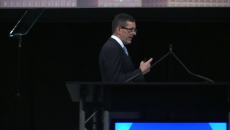
JoAnn Klinedinst, Vice President of Professional Development at HIMSS, previews the topics and approach for education sessions at HIMSS16 and how attendees can access content online after the conference in the newly redesigned Learning Center.
LEARNING CENTER: Health IT's most comprehensive online learning platform
The vast majority of Americans say they would welcome using technology and mobile devices to monitor their health, according to a recent study by the Society for Participatory Medicine, a nonprofit membership organization focused on patient engagement.
The study found 84 percent of survey respondents felt tracking blood pressure, heart rate, respiratory rate, physical activity and other data with a user-friendly mobile device between provider visits would help to better manage their health.
[Also: Remote patient monitoring market booming amid readmission fines]
"The important findings from the survey show patients really want to partner with physicians," said Daniel Z. Sands, MD, co-founder, co-chair of the Society for Participatory Medicine.
"It's not a typical service industry, like the car wash model of healthcare where the patient cruises through the system," he added. "Providers need to engage patients, and patients want it."
In fact, 77 percent of survey respondents felt it was both important for themselves and their healthcare provider.
ORC International interviewed more than 1,000 Americans on behalf of the Society for Participatory Medicine and found 76 percent of respondents would use a clinically accurate and easy-to-use monitoring device; 81 percent would be more likely to use a device if their provider recommended it, and 57 percent would like to use the device and share the information with their provider.
"I think many physicians believe patients just want to come in for their visits, but don't really want to engage in their healthcare," said Sands. "The participatory method is really important, but the question is, do physicians want to have a partnership?"
"If we get it right, we have the opportunity to leverage technology to help patients contribute to their health information without coming into the office," he added. "This information is valuable to patients and to providers. It's an important tool to get healthcare outside of the office."
According to Sands, it's a change in mindset for many providers that medical schools are attempting to combat. But it's challenging in the constraints of a medical practice to transition to this type of care. Further research must be done on physicians to determine their issues and thoughts.
Twitter: @JessiefDavis
Patient care teams at Yale-New Haven Hospital, looking for a faster, more efficient and more secure way to communicate with each other in the emergency room, have adopted smartphone applications to speed up workflows.
The changeover from stilted clinician communications and responsiveness as a result of the hospital’s emergency room reconstruction. At certain times, different areas of the department would be closed creating confusion and making it difficult to locate personnel.
In addition, the way the pediatric emergency department was logistically set up, the clinicians working there had no line of sight, making it hard for them to communicate with one another.
[Also: Intermountain deploys ReadyPoint for audit compliance]
Eventually, the hospital bucked its traditional methods, which included a public address system and a VOIP wireless phone system, turned to MH-CURE – for Clinical Urgent Response – a smartphone application from Waltham, Massachusetts-based Mobile Heartbeat.
MH-CURE offers care teams secure, single smartphone access to all clinical communications, pertinent patient information and lab data. Care team members have a choice of using their own smartphone or sharing hospital-supplied devices. It consolidates clinical communications, including alarms and notifications, pertinent patient information, lab data, texting, voice and photography.
Allen Hsiao, chief medical information officer and associate professor of pediatrics and of emergency medicine at Yale-New Haven, said adoption was easy and the staff realized early the power of having everyone on one platform.
[Also: OhioHealth taps Epic's MyChart Bedside]
"We choose the ED because it's as a self-contained a unit as you're going to find in a hospital," said Hsiao. "We certainly have the dynamic need of trying to find the right nurse, the right physician, at the right time, they are often in different rooms out of sight."
So far, he said, the impact has been positive. "We're saving a lot of time. We used to play phone tag, used to get interrupted taking care of patients, having to step out to take a call or answering an overhead page. It's giving us back time with the patient at the bedside."
Hsiao said that if a doctor or nurse gets a text, they can glance at it very quickly without leaving the patient and they can decide whether or not they need to step away or if it can wait and continue to do what they were doing with the patient. In addition, their train of thought and conversation with the patient is not interrupted.
"Unlike a traditional text message I can see if another physician or nurse has read my text or not – they can tell if I read it or if it’s been delivered and not read yet," he said. "That helps a great deal. Then I know if they haven't read it and it's urgent, I can escalate with a phone call."
Hsiao said that with traditional text or pager you have no way of knowing if the receiving person read a text or not.
For example, if a lab sends critical lab alerts, instead of playing phone tag the alert is automated – so when something is critical, needs intervention right away, as soon as the result is back the text gets triggered right to a smartphone.
Hsiao said the effect on patient care has been positive.
"It cuts down on the delays between awareness of information and actual treatment."
Hsiao said adoption has been driven by the flexibility of the platform, such as the ability to use an Android or iPhone device, and integration with the electronic health record.
"All these features add to the functionality and the importance of the technology
so it becomes a secure HIPAA-compliant ecosystem for clinical tools, that is the wave of the future," he said.
According to a Mobile Heartbeat, an outside consulting firm conducted a study, before and after the MH-CURE implementation, to determine how long it took for the clinicians in the emergency departments to communicate with one another.
Results revealed that the amount of time required for clinicians to locate and transmit information to one another was greatly reduced, allowing staff to spend more time with patients and thus provide better patient care.
In a poll of clinicians, 75 percent said they now found it easy or very easy to communicate with colleagues with MH-Cure; just 24 percent felt that way prior to using it. Nearly 75 percent, meanwhile, reported that MH-CURE has improved patient workflow and patient safety.
[Like Healthcare IT News on Facebook]
James Webb, vice president of strategic accounts for Mobile Heartbeat, said that the market for this smartphone technology is growing because secure texting is a major driver.
"What we're seeing at MobileHeart beat is that people do not want to lock in to just a secure text solution, they want a full communications package, clinical workflows and inputs and alerts from various systems in the hospital," said Webb. "We see a lot of sites looking at their mobility strategy and really the major thing for their apps is they have to be able to play well together."
Hsiao said that in addition to the adult and pediatric ED the smartphone app is now being deployed in its medical and surgical departments – and recently in intensive care units and emergency departments – at all of Yale's other hospital campuses, including the main campus in New Haven.
Twitter: @HealthITNews
SPONSORED
|
04:00 am |
February 04, 2016
|
04:00 am |
February 04, 2016
(SPONSORED) Mobile devices are an important part of the modern health landscape, but the industry needs to go further than that.

Tom Martin, PhD, Director at HIMSS and PCHA, provides a sneak peak at what’s in store for attendees interested in learning about connected health technologies at HIMSS16.
Watch more video coverage of HIMSS16
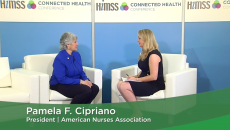
Pamela F. Cipriano, PhD, RN, NEA-BC, FAAN, President of the American Nurses Association (ANA), sits down with Healthcare IT News at the HIMSS Connected Health Conference to discuss the important role of nurses in adoption of mobile health technology.
LEARNING CENTER: 2015 HIMSS Connected Health Conference Session Recordings
Patricia Mechael has been appointed executive vice president, Personal Connected Health Alliance at HIMSS, effective April 15, HIMSS President and CEO Steve Lieber announced on Thursday.
Mechael will serve as consultant for HIMSS until her official appointment. She'll facilitate market analysis, business planning processes and guide immediate term goals.
At PCHA, she hopes to advance trends toward self-care technology as a way to address challenges such as chronic illness management and mental health.
[Also: The making of an mHealth maven]
Mechael most recently served as executive director of the mHealth Alliance and as Principal and Policy Lead for HealthEnabled. She also has collaborated with the mHealth Summit for more than seven years. She has 15 years of experience in field building and thought leadership.
At HealthEnabled, she concentrates on global thought leadership and advocacy, research and policy work in Nigeria, South Africa and Uganda, while working with the World Health Organization to create a Global Health Index and State of the World's Digital Health Report.
She was recently awarded a Rockefeller Foundation Bellagio Center fellowship for a study entitled, the Future of Health is Digital that highlighted the use of technology to improve patient outcomes and strengthen the health system.
Twitter: @JessiefDavis
Intermountain Healthcare is rolling out mobile, cloud-based rounding and audit compliance tools powered by Nashville-based ReadyPoint.
OhioHealth hospitals are among the first users of Epic's MyChart Bedside to enable patients to view their health information, lab results, review videos, exchange messages with their medical team, and generally and plan for the day.