Interoperability

Leidos' Partnership for Defense Health announced the deployment of MHS-Genesis, the U.S. Defense Department's Federal Electronic Health Record system, at the Captain James A. Lovell Federal Health Care Center (Lovell FHCC) in Chicago.
The deployment was the first time DoD and Department of Veterans Affairs, the Federal Electronic Health Record Modernization office and the Leidos team have collaborated on a joint government EHR implementation, the company says.
The FHCC integrated joint sharing site serves both DoD and VA patient populations. This deployment added 1,200 DoD and 2,000 VA clinicians, providers and other end-users.
MHS GENESIS is now operational at over 3,890 locations worldwide, with over 197,200 end-users, and serving more than 9.5 million beneficiaries.
For the VA, the deployment represents a key step forward in their EHR implementation efforts.
Leidos is the lead systems integrator and prime contractor for the MHS Genesis deployment, with the Leidos Partnership for Defense Health (LPDH) consisting of industry leaders including Oracle Health, Accenture, Henry Schein One and dozens of supporting businesses.
Leidos provides leadership and daily oversight to all programmatic functions, as well the overall architecture and deployment strategy.
This includes virtual/in-person training during system deployments, as well as providing critical cybersecurity expertise to ensure the MHS GENESIS system meets the requirements necessary to protect DOD information.
Through MHS GENESIS, service members and their family members receive an integrated health record that follows them throughout their lives and helps support their health decisions and healthy lifestyles.
The platform is designed to help improve care outcomes by seamlessly exchanging health information across the federal government.
With MHS GENESIS, clinicians no longer toggle between two systems – patient records are available in a single, common federal EHR.
This means patients spend less time repeating health history to providers, undergoing duplicative tests, or managing printed health records.
In addition, providers have access to patient data such as service treatment records, service medals and honors, housing status and other information to ensure patients receive earned benefits when they transition to civilian life.
The platform also provides a more seamless care experience for patients, regardless of whether they receive care from the DoD, VA, Department of Homeland Security's U.S. Coast Guard or another health care system participating in the joint health information exchange.
"The integration helps patient providers make more informed decisions about patient care as they have access to more relevant data," Alyssa Pettus, Leidos director of external communications, told HealthcareITNews via email.
She noted additional federal agencies are expected to adopt it soon.
In 2015, Leidos was awarded the $4.3 billion contract to modernize the DoD’s legacy healthcare systems.
Beyond DoD garrison facilities and VA sites, the Leidos team has deployed Genesis to U.S. United States Military Entrance Processing Command, the U.S. Coast Guard, and the National Oceanic and Atmospheric Administration.
"Beyond achieving 100 percent DoD deployment, the FHCC deployment represents a key milestone for the VA’s overall EHR implementation efforts, as well as DoD-VA connectivity, driving forward their future deployment efforts," Pettus said.
Nathan Eddy is a healthcare and technology freelancer based in Berlin.
Email the writer: nathaneddy@gmail.com
Twitter: @dropdeaded209

The "outcomes-driven" strategy for the rest of this decade is focused on key goals: boosting access to electronic health information, improving the patient experience by prioritizing health equity and modernizing public health infrastructure.

Never before has healthcare cybersecurity been so critical. The risks to patient safety and business continuity are immense. Here are some perspectives and best practices for protecting your organization.

In an update on several looming regulatory deadlines, the HIMSS Electronic Health Records Association said it asked ONC for enforcement discretion on a December 1 deadline.

Emergency medical response information isn't used enough in healthcare. Agencies are looking to align with TEFCA, seeking partners to improve interoperability with state EMS systems and to build out technical resources for bidirectional exchange.

CliniComp's system-as-a-service EHR model reduces costs through its subscriptions, provides an accurate, accessible longitudinal patient record and enables faster deployment of new features, says Sandra Johnson, SVP, client services at CliniComp.

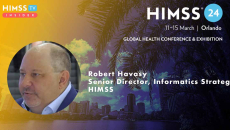
How have HIMSS24 attendees been demonstrating AI's results and discussing legislation? What strategies are there to help interoperability's progress? Robert Havasy, senior director of informatics strategy at HIMSS, answers.

The anchor exhibitor featured performance improvements, pre-built clinical quality analytics and more to help increase reimbursement and enhance care. Oracle Health EVP Seema Verma shared insights on AI's potential, interoperability under TEFCA and more.

SPONSORED
 |
11:18 am |
March 18, 2024
|
11:18 am |
March 18, 2024
|
11:18 am |
March 18, 2024
Make the most of moving to the cloud.