Government & Policy
European Union Blockchain Observatory & Forum, says that, while there are tensions and some uncertainty about how to protect data and use blockchain under GDPR, there are still ways to accomplish it.
Two healthcare leaders from Germany offer best practices for assessing privacy and security posture – not just for EU legal requirements, but because it's the right thing to do.

To protect the NHS' national critical infrastructure against hacktivists, major crime organizations and nation states, there needs to be further collaboration between key stakeholders, says AbedGraham's healthcare cybersecurity expert Dr. Saif Abed.
Attorneys offer their perspective on the privacy and compliance issues faced by the technology and how it squares, or not, with laws such as HIPAA and GDPR.
Three winners and one honorable mention have been announced in the Office of the National Coordinator for Health IT's Certified Health IT Product List Data Challenge. The competitors were tasked to find ways for users of the Certified Health IT Product List to make better use of the granular data it keeps on every technology product that has been approved by ONC.
The winners include:
ResearchAE. First place winners ResearchAE took their background in developing health IT dataset search engines to map out many of the different realms of data CHPL contains, enabling users to analyze how ONC certified health IT is being used and by whom. The prize was $20,000
Shiro Labs. Shiro Labs claimed runner-up for an application enabling providers to cross-analyze their Medicare Quality Payment Program and CHPL data, helping them see how they are meeting their reporting requirements. The prize was $10,000.
Darena Solutions. Darena Solutions also won runner-up for CheckEHR, a program that lets users view which certified criteria different certified health IT modules meet, allowing them to better reach goals like patient engagement or care coordination. The prize was $10,000.
Tom Nguyen. Nguyen won an honorable mention for a Google Chrome extension that helps users more easily navigate the CHPL listings.
WHY IT MATTERS
The CHPL contains a massive amount of very granular data which has only recently been made available in a structured and actionable way. Providers already have to abide by a wide range of standards and regulations, so having easier access to the CHPL data and finding ways to make more efficient use of it will help enable organizations to better use their health IT.
Webinar: The EHR App Store Is Open - What Is on the Shelf?
THE LARGER TREND
As the healthcare technology marketplace evolves, new to health IT start to take bigger roles in the space, providers will continue to roll out new IT services to meet those demands and remain competitive. Being able to make intelligent searches of CHPL data means providers can chart a more informed course though the array of technology options available.
ON THE RECORD
"This challenge shows that there is more to the CHPL data than meets the eye. It is great to the see the creativity and ingenuity each participant put into their submissions," said Steve Posnack, executive director, office of technology, ONC.
Benjamin Harris is a Maine-based freelance writer and and former new media producer for HIMSS Media.
Twitter: @BenzoHarris.
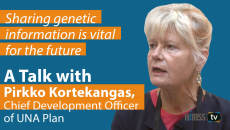
Chief Development Officer at Finland’s UNA Plan Pirkko Kortekangas says that data privacy is a priority, but sharing information is key when searching for medical solutions.
The 22-year-old privacy law should be updated for a mobile tech-centric and data-driven world, the information management and medical informatics groups said.

Romanian Health Minister Sorina Pintea tells HIMSS Chief Clinical Officer Charles Alessi about digitizing primary care, plans to reform the healthcare system and the concept of a digital hospital.
In the book Affordable Excellence: The Singapore Healthcare System by William A. Haseltine published in 2013, the author noted that Singapore “ranks sixth in the world” in terms of healthcare outcomes, while “spend[ing] less on healthcare than any other high-income country”. When compared with other countries, Singapore ranks high on value-based indices - A 2014 EIU white paper that looked at health outcomes and costs across 166 countries ranked Singapore second after Japan, noting that it had achieved similar outcomes to Japan’s but with a significantly lower investment.
One of the key pillars behind Singapore’s remarkable success in delivering affordable and high-quality healthcare since its independence in 1965 is the government’s approach to healthcare improvement and care as an integral and inseparable part of the overall development planning for the country, Haseltine explains in the first chapter of his book.
In November 2017, the Ministry of Health introduced the ‘3 Beyonds Strategy’ to keep healthcare in Singapore good and affordable.
They are:
(i) Beyond Healthcare to Health
(ii) Beyond Hospital to Community
(iii) Beyond Quality to Value
With an aging population and increasing costs and burden of healthcare in Singapore, the “Beyond Quality to Value” strategy becomes essential to retain or increase quality of care while ensuring value for money. The Agency for Care Effectiveness (ACE) was set up in 2015 to research treatments that provide the best value for money. For instance, three drugs may offer the same results, but have very different prices. Or a drug may be more expensive, but offer outcomes that are far better than cheaper alternative drugs.
Webinar: Compliance as code: Automate compliance using open source technology
In the long run, the conventional method of fee for service-based care that works on a basis of volume and treating illnesses and injuries as they occur is also not tenable – hospitals and healthcare organisations cannot expand their capacities indefinitely and there is already an existing manpower crunch of qualified professionals in the healthcare sector.
Treating illnesses and diseases when they occur is often expensive and unpleasant for patients – therefore, the proverb, “prevention is better than cure” is especially relevant. The “Beyond Healthcare to Health” strategy has seen the Health Promotion Board (HPB) ramping up efforts for people to become healthier and more active, through initiatives such as the National Steps Challenge (currently in its forth season) and Healthier Dining Programme.
Value-based care prioritises health outcomes that matter to patients relative to the cost of achieving those outcomes. This is also related to “Beyond Hospital to Community” strategy in which patients can receive appropriate care community or at home so they can stay well and avoid frequent hospital admissions. This is better for them in terms of health and convenience, and for the healthcare system too, as hospital care is very expensive.
The transition from a fee for service-based to a value-based healthcare system may not be an easy journey for many healthcare providers and organisations but it also presents many opportunities to relook existing approaches to healthcare, not just in the delivery of patient-centric care but also in aspects such as financing models and leveraging technologies such as AI to provide value to both patients and clinicians while reducing costs.
With the theme of “Disruptive innovation for Value-based healthcare”, the HIMSS Singapore eHealth & Health 2.0 Summit held from 23-24 April 2019 at Marina Mandarin Singapore will feature six main topics related to achieving value-based healthcare:
(i) Population health
(ii) Healthcare revenue cycle
(iii) Patient outcomes
(iv) Acute-to-community
(v) Cybersecurity; and
(vi) Artificial intelligence
The HIMSS Singapore eHealth & Health 2.0 Summit will be a great opportunity for like-minded healthcare leaders and professionals in Singapore and abroad to come together to tackle some of the major challenges and opportunities in moving towards a value-based healthcare system.
The U.S. Department of Health and Human Services has announced the winners of a new challenge to develop software for identifying and reporting safety and usability issues in EHRs in a way that doesn’t disrupt clinical workflow.
The winning tools aim to make it easy to report IT issues within the healthcare workflow: giving feedback to developers and guiding the formation of best practices. The hope is to targeting usability challenges before they become major problems.
Three winners were announced:
The James Madison Advisory Group came in first, with a hotkey that allows a clinician to document an issue without leaving their EHR and which simplifies the process of reporting issues.
Pegwin, in second place, developed an intuitive reporting system that allows a user to document an issue “in as few as three clicks.”
Jared Schwartz and team came in third with a Google Chrome plugin which integrates with common IT ticketing platforms, making it easy to work into existing systems. The winners received $45,000, $25,000, and $10,000 respectively.
WHY IT MATTERS
Like any software, EHRs sometimes have flaws or malfunctions. An already busy clinician who is trying to manage a full patient load, perform diagnostic work and enter data usually doesn’t have time to document and report safety or usability issues to his or her IT department.
Webinar: Improving Patient Matching in your EHR: A Case Study
Finding a way to work tools into the care workflow that allow practitioners to capture and share potential safety and usage concerns results in greater efficiency without disrupting a clinical workflow.
"Improving the safety of health IT remains an important priority," said Dr. Andy Gettinger, ONC chief clinical officer. "We believe that making it easier for end users to report will help in that goal."
THE LARGER TREND
EHRs have the potential to be the first point of data capture in a new landscape of precision care. First, though, they need to win over physicians who see them as cumbersome and byzantine replacements to the old pen and paper methods.
Some healthcare systems are focusing on identifying those problems and addressing them to enhance the value of their EHR systems. Practitioners are experiencing EHR burnout – something ONC has also recently been working to help combat – where poor usability or other IT safety concerns can have a detrimental impact on effective patient care.
ON THE RECORD
"Helping reduce the burden of health IT continues to be a key area of focus at the Office of the National Coordinator for Health Information Technology, and we anticipate the winning submissions to the Easy EHR Issue Reporting Challenge will help with those efforts," said ONC chief Dr. Don Rucker.
Benjamin Harris is a Maine-based freelance writer and and former new media producer for HIMSS Media.
Twitter: @BenzoHarris.