Government & Policy

Think tanks slam plans to give Government more power over the NHS.

The U.S. Food and Drug Administration's Dr. Suzanne B. Schwartz says that no single stakeholder can solve medical device cybersecurity issues on their own.

African Union urges the European Commission to recognise Indian manufactured Covishield vaccine.

Monthly Update: HIMSS Media's Jonah Comstock recaps some of June's top healthcare stories, including event news, upcoming wearables and controversy surrounding the UnitedHealth Group.

Following a three-month review of the program, Veterans Affairs Secretary Denis McDonough said this week that the department would stay the course with the Millennium-based platform, despite scheduling setbacks.

Believe it or not, we're already halfway through the year. Here's what HITN readers have been clicking.
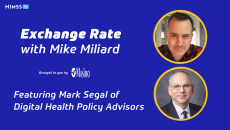
Two months since the ONC info blocking rules took effect, many health systems are still sorting out what is required of them. Mark Segal, principal at Digital Health Policy Advisors, offers an explainer and shares best practices to avoid looming penalties.
Meanwhile, a new report shows that the U.S. leads the way in cybersecurity commitment – though it's clearly still vulnerable.
The platform aims to centralise various data in order to help improve disease prevention, as well as manage public health projects, and promote the involvement of communities in health programmes.
The COVID-19 pandemic acted as an accelerator of sorts for many experiments with virtual care implementations.
But, panelists pointed out during the American Telemedicine Association conference on Tuesday, it's important to take the lessons learned during the pandemic and incorporate them into future innovation efforts.
"Before the COVID-19 pandemic, telehealth was seen by many as the future of healthcare," said Sen. Brian Schatz, D-Hawaii, during opening remarks.
"But today, it is healthcare," he continued.
Schatz, who recently spoke with HIMSS TV about the importance of safeguarding telehealth in the long term, pointed to the CONNECT for Health Act as evidence of broad-based support for virtual care.
"For more than a decade, bipartisanship on healthcare has been very hard to come by," said Schatz. "But the single shining exception is telehealth."
"That's because telehealth works, and it's popular," he argued.
Schatz urged attendees to continue pushing for access to virtual care.
"We cannot and should not go back to the Stone Age of telehealth coverage," he said.
Indeed, if Congress does not act, advocates have repeatedly warned that Americans will face what they call a "telehealth cliff."
Absent any change in law, "the vast majority of those waivers" put into place at the start of the public health emergency "are going to go away," said Amy Bassano, deputy director at the Center for Medicare and Medicaid Innovation at CMS, in a fireside chat following Schatz's remarks.
At CMMI, she says, "we are thinking about everything we've learned to date, based upon our models we've tested [and] based on what's happened in the public health emergency ... and how can telehealth and these other services really be a tool to help achieve those savings."
CMMI, she says, has the authority to test how different innovation models – including those that use telehealth – can increase efficacy.
"As we think about being patient-centered ... we think we can use our models to help ensure equity for the providers, for the patients – the folks in the models and the healthcare system at large," she said.
Given general concerns about telehealth and spending, she said, "We need to be in a place where we are not looking to just increase costs or add additional services for the sake of those services."
"They really need to be very focused on the outcomes and what we are trying to do," she continued.
If Bassano could "wave a magic wand" to set virtual care-related priorities in the near future, she said, "It really is continuing this movement [toward] value and recognizing that virtual care is a really important part of that."
'Regarding how the private sector could contribute to this effort, she said, companies could and should keep "building what people need" and creating tools that are compliant with other requirements.
In short, she said, "Keep on going."
The movement over the last decade alone, she said, has been amazing. "I can only imagine where we'll be ten years from now," she said.
Kat Jercich is senior editor of Healthcare IT News.
Twitter: @kjercich
Email: kjercich@himss.org
Healthcare IT News is a HIMSS Media publication.