Decision Support
The notion of gleaning insights from mountains of health information -- and then applying those precisely to individual patients -- hinges on the confluence of various factors. But it all boils down to one magic word.
Stage 3 of meaningful use is shaping up to be the most challenging and detailed level yet for healthcare providers. Among the elements that warrant attention are quality reporting, clinical decision support and security risk analysis.
Today is the last day to submit a speaking proposal for the HIMSS and Healthcare IT News Big Data & Healthcare Analytics Forum in Boston, Nov. 4-6. Presentations should be practical, actionable and solutions-based.
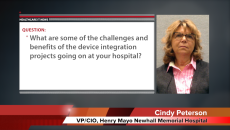
Cindy Peterson, VP/CIO at Henry Mayo Newhall Memorial Hospital in Valencia, California, talks about device integration, data security and meaningful use.
HHS could soon release a big collection of data, twice as much as it has in the past, according to a report from Medical Practice Insider.
Cleveland Clinic is the latest world-class provider to make its analytics algorithms available on Apervita, enabling other health providers to put some of its knowledge to work improving their own outcomes.
Regenstrief Institute aims to change the clunky nature of clinical decision support by making it possible for the clinicians to write decision support rules based on personal experience with their patients.
Attendees of the HX360 inaugural event at HIMSS15 offer perspectives on what the future of healthcare has in store. How do you see the future of healthcare evolving?
Marking a substantive push to move the industry upstream of chronic disease, CMS' proposed rule requires more clinical decision support. Here are two ways of harnessing technology to meet the criteria.
A relative newcomer to the C-suite, the chief medical information officer title continues to redefine itself. One frustrated CMIO captured the anxiety of this new role when he referred to himself as the "chief apology officer."