Connected Health
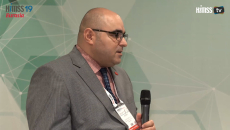
Dr. Aziz Ahmet Surel, coordinator chief physician at Ankara City Hospital in Turkey, says clinical leadership, government support and financial resources are all central factors in driving digital transformation and achieving HIMSS EMRAM Stage 7.
Update: HIMSS20 has been canceled due to the coronavirus. Read more here.
Outdated technology and processes create challenges across an overburdened healthcare system, resulting in increased costs, alienated patients, and inferior outcomes across the healthcare system.
However, virtual health assistants and chatbots aim to improve the conversation between healthcare provides, payers and patients and put more information in the hands of the end users, to help healthcare organizations improve processes and reduce costs.
"Virtual health assistants can help healthcare organizations improve processes and put more information in the hands of their users," explained Hadas Bitran, group manager for Microsoft Healthcare Israel.
Bitran, who will address the topic this week at HIMSS20, said to provide value, virtual health assistants need to be built with healthcare intelligence, including understanding medical terminology, user intents and context, and providing credible answers.
"The virtual assistant needs to be integrated to the organization’s assets and extended to support its processes and needs, while maintaining top privacy, security and compliance standards to allow it to handle healthcare use cases and data," Bitran noted. "Virtual health assistants need to be designed to bring enough value to users, be it patients or doctors."
She said challenges and pitfalls can include virtual assistants that are designed to be too limited, or can only do one thing.
This means virtual assistants need to be able to handle diversion from the conversation and unexpected responses, and they need to constantly learn what the user expectations are.
"Especially in healthcare, virtual assistants need to constantly update the content they rely on, and need to understand when they don’t understand or can’t help," Bitran said. "Those challenges and pitfalls need to be considered right from the start, when choosing the technology."
Microsoft Healthcare sees a broad range of use cases for virtual health assistants, including cases that involve checking symptoms and finding information about providers, services, locations and coverage.
Virtual health assistants could also help with finding information about healthcare conditions, medications and procedures, and improving administrative processes like proactive follow-up, sending reminders and scheduling.
"We also see use cases like assessment questionnaires and matching patients to potential clinical trials,” she said. “As virtual health assistants become more integrated with the healthcare system, their role will expand."
Mobile technology and connected devices will also allow virtual health assistants to become a productive mean of communication between remote patients, providers and payers, and put more information in the hands of users when and where they need it.
Bitran noted one example for this impact is that the broad types of media available to mobile users introduces the need for virtual health assistants to support voice channels, handle visual inputs, and enable contextual handoff to humans over chat, voice or video.
She noted that while virtual assistants will not replace medical professionals, the virtual assistants could augment the medical professionals’ work and reduce the burden on them from the system.
Bitran will share insights on virtual health assistants in her HIMSS20 session, "Virtual Health Assistants: Best Practices and Real Use Cases." It’s scheduled for Tuesday, March 10, from 3-4 pm in room W414A.
The funds will be used by the Seqster to accelerate the adoption of their interoperability technology for clinical trials, patient engagement and outcomes.
Last week, Victoria-based Melbourne Pathology became the latest pathology provider to upload reports to My Health Record (MHR). This allows both patients and clinicians to have convenient and secure access to their pathology reports. Other Victorian labs sharing reports with consumers and clinicians in the MHR include Alfred Health, Monash Health and VCS Pathology. The full list of participating providers is available here.
THE LARGER TREND
Last June, the Northern Territory (NT) Department of Health became the first pathology provider to link the online tests results it is sharing via MHR with Lab Tests Online, HealthcareITNews reported. In the same month, South Australia (SA) Pathology also connected to the MHR.
Based on the latest statistics from the Australian Digital Health Agency (ADHA) as of December 2019, there are 22.68 million MHRs, of which 12.99 million records have information in them.
ON THE RECORD
“Investigation results are one of the most common tools doctors use to evaluate your health. In the 2018-2019 financial year alone, Medicare funded over 147 million pathology tests,” said Professor Meredith Makeham, a GP and Chief Medical Adviser, ADHA in a statement.
“It’s easy to quickly lose track of your results, particularly if you don’t have a regular GP or when you are seeing a range of healthcare professionals to manage multiple conditions and tests.
MHR allows you to keep your important test results safe in one place, which you and your healthcare providers can access at any time to make more informed decisions about your treatment or care.”
Victorian-based general practitioner, Dr Nathan Pinskier, said: “When I need a patient to have a pathology test, I simply send an electronic request and the patient attends the lab with a paper copy. Since the lab already has the electronic request, there’s no human data entry, which greatly reduces the risk of patients receiving the wrong test.
Once there’s a report, I receive a copy through my secure messaging software and my patient receives a copy in their MHR, where it can’t be lost and where future healthcare providers can review it to inform their own clinical decision-making.”
Update: HIMSS20 has been canceled due to the coronavirus. Read more here.
Gauging a patient’s recovery status is tricky if you don’t know what they should be expected to recover to. Researchers are using data collected from patient-worn sensors, such as Apple Watch or Fitbit, to build a "digital twin" of baseline patient health information.
A digital twin is essentially like creating a backup of a patient’s physical state before a procedure, so providers know what to look for a patient to work towards in recovery, said Dr. Mohamed Rehman, a professor and clinician at Johns Hopkins All Children’s Hospital, who will explain the concept in a session at HIMSS20 on March 11.
Currently, data points such as steps, heart rate, and hours of sleep are used to monitor patients in a variety of settings, but Rehman said there are greater capabilities on the horizon.
"Once we develop the digital twin, we can use it to improve the person," he explained. "You can use it as a metric for improvement."
The ability to spot abnormalities and the health impacts they may portend is where Rehman sees the digital twin headed.
For instance, if a 30 year old patient normally takes 12000 steps a day, and gers 8 hours of sleep a night and suddenly goes to 6000 steps, and five hours of sleep, something could be seriously wrong.
A system that can track deviations from baseline can pick up issues much earlier, said Rehman.
Real-time monitoring means the possibilities for new data sources are wide. Rehman says even using a metric like time spent on social media can be valuable. If a teenager usually spends three hours a day on social media and gradually drops to an hour to 30 minutes, it could be a harbinger of problems with their mental or physical health.
The insights brought by a digital twin means that care can become more precise, targeted, and based on the most accurate and real-time personal data possible.
Rehman notes that the current paradigm relies on a doctor asking a patient how they feel. Wider use of digital twins could change this.
"When you go to the doctor, they’ll already have data off your digital twin," said Rehman – noting that wearable technology is ubiquitous and that many people are already capturing this data. Imagine if a doctor already had clues about a patient’s health before they even walked in the door.
"Today you’re giving them subjective data," he said. "This will be objective data."
Dr. Mohamed Rehman will discuss this emerging approach to personalized medicine during his HIMSS20 session, "Creating Digital Twins: Leveraging the IoMT." It's scheduled for Wednesday, March 11, from 2:30-3:30 p.m. in room W230A.
But Providence St. Joseph Health Chief Digital Officer Aaron Martin sees a near future when hospitals will meet their disruptors halfway.
Its new report on emerging technologies sees appetite and aptitude growing for telehealth and virtual visits, remote patient monitoring, clinical decision support and more.
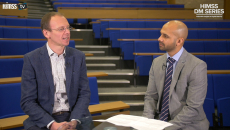
The clinical workforce plays a major role in successfully embedding a digital strategy to improve the patient experience, says Mark Hutchinson, chief digital officer at Gloucestershire Hospitals NHS Foundation Trust in the UK.

Creating a robust API infrastructure - a living system where everything is connected so data is available for decision-making – is the goal, says Yauheni Solad, medical director of digital health at Yale New Haven Health.
At HIMSS20, AT&T's global director of strategy and innovation will describe the advantages of 5G cellular and edge computing, and describe some of the best healthcare use cases for the next-gen communication specs.