Clinical
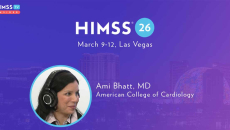
Devices and sensors can spot subtle physiological changes to enable earlier intervention for patients with cardiometabolic disease, says Dr. Ami Bhatt, chief innovation officer at the American College of Cardiology.
While AI boosts hospital transformation and personal productivity, HIMSS26 attendees have concerns about the technology's trustworthiness, possible misuse and ability to sideline human voices in decision-making.

Newly announced artificial intelligence applications highlight the shift toward domain-specific automation, where reasoning and native integration aim to improve efficacy and safety.
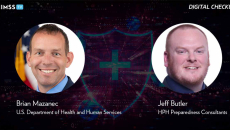
It allows health systems to assess an array of healthcare risks and benchmark readiness, say Brian Mazanec, deputy assistant secretary at HHS Administration for Strategic Preparedness and Response and Jeff Butler of HPH Preparedness Consultants.
Our HIMSS26 interviews reveal how conference-goers leverage AI to enrich their personal and work lives and the potential AI tools hold for streamlining operations and improving care delivery in the future.

Agentic AI soon will be much more than preparing documentation, says Microsoft's Kenneth Harper. The technology will surface key data from captured patient-doctor conversations that can boost clinical decision making.
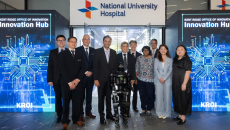
The NUH Innovation Hub serves as an incubator and a sandbox for medtech and AI startups.
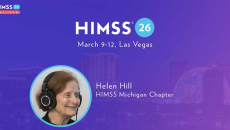
Helen Hill, VP and CIO of Michigan-based SEMHIE and a HIMSS26 Founder Changemaker awardee, has helped launch MiHIN, the Michigan health information exchange. She also chairs its interoperability task force and runs a small sub-HIE.

More veterans have faster access to community care appointments and will have access to VR therapies, while an agentic artificial intelligence-enhanced operational system will help 150 VHA medical centers eliminate siloed processes.

HIMSS26 Changemaker honoree John Paganini says the Northern Ohio HIMSS AI Center of Excellence's diverse roster of members is working to advance healthcare AI in the region.