Clinical

It will ensure a "unity of mission" across its members' respective programmes.

SPONSORED
 |
03:34 pm |
April 12, 2022
|
03:34 pm |
April 12, 2022
|
03:34 pm |
April 12, 2022
The adoption of new technology has helped Abu Dhabi's Capital Health hospital improve clinical outcomes, drive business efficiency and empower the workforce. See this virtual tour from the United Arab Emirates.

Mount Sinai Health System’s VP of clinical innovation and chief nursing informatics officer Robert Freeman discusses how AI can help keep patients safer and support frontline teams.

"The change management began years and years before the first camera was hung," explained a Houston Methodist leader. Myriad health system stakeholders needed to adjust their ways of thinking and doing things in order to make the project work.

The fully digitised health facility in Queensland is slated to open in early 2023.

The EHR integration will streamline clinicians' ability to order Guardant cancer tests and access results within Epic workflows.

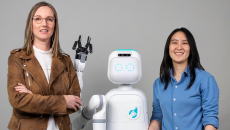
Si Luo, vice president of Vocera Edge, discusses ways to implement new technologies and improve the overburdened clinician's workflow.

University of Utah Health, Regenstrief Institute and Hitachi this past week announced the development of a new artificial intelligence approach that could help improve treatment for patients with Type 2 diabetes mellitus.
WHY IT MATTERS
Researchers from all three organizations collaborated to develop and test a new AI approach to analyzing electronic health record data across Utah and Indiana. As they did, they uncovered some patterns for Type 2 diabetes patients with similar characteristics.
Those hope is that those treatment patterns can now be used to help determine an optimal drug regimen for a specific patient.
University of Utah researchers had worked with Hitachi for several years to develop a pharmacotherapy selection system for diabetes treatment, but a lack of sufficient data meant that it wasn't always able to accurately predict more complex and less prevalent treatment patterns.
It also wasn't easy to use data from multiple facilities, researchers said, because it was necessary to account for differences in disease states and therapeutics prescribed across regions.
So U of U researchers collaborated with Regenstrief experts to enrich the data it was working with – enabling a AI-based approach that first groups patients with similar disease states, then analyzes treatment patterns and clinical outcomes.
The model then matches specific patients to the disease state groups – predicting a range of potential outcomes, depending on different treatment options.
Researchers assessed how well this method worked in predicting successful outcomes given drug regimens administered to patients with diabetes in Utah and Indiana.
Their findings showed the algorithm was able to support medication selection for more than 83% of patients, even when two or more medications were used together.
More detailed results from the study are published in the peer-reviewed Journal of Biomedical Informatics.
U of U and Regenstrief will continue work on evaluating and improving the efficacy of these models, with help from Hitachi's health IT business divisions and R&D group.
THE LARGER TREND
While 10% adults worldwide have been diagnosed with Type 2 diabetes, these researchers note, a smaller percentage require multiple medications to control blood glucose levels and avoid serious complications, such as loss of vision and kidney disease.
For this group of patients, physicians may have limited clinical decision-making experience or evidence-based guidance for choosing drug combinations, researchers note. It's hoped that this new AI-enabled clinical approach can help patients who require complex treatment in checking the efficacy of various drug combinations.
At HIMSS22 this past months, hospital CIOs offered their insights on how AI and machine are helping uncover hidden insights in EHR data.
Artificial intelligence is increasingly proving its mettle for diagnostics and treatment as approaches to managing diabetes and other chronic conditions evolve.
The American Diabetes Association, for instance, recognizes use of some autonomous AI applications, such as screening tools for diabetic retinopathy, and says they meet the standard of care.
Meanwhile, health systems are finding new successes using telehealth and remote patient monitoring for diabetes management.
ON THE RECORD
"Based on our findings, future progress in techniques for developing models using data from multiple sources, especially when sample sizes of individual sources are small, has the potential to contribute to improved clinical decision support," said researchers in the Journal of Biomedical Informatics.
"At the same time, it is important to develop the infrastructure and processes that allow technologies such as distributed learning, which can provide predictive performance equivalent to integrating source data, to be implemented as easily as integrating models. Last, prediction models such as those we describe here should be evaluated in clinical practice regarding acceptability and impact."
Twitter: @MikeMiliardHITN
Email the writer: mike.miliard@himssmedia.com
Healthcare IT News is a HIMSS publication.

Dave Vennergrund, GDIT vice president of artificial intelligence and data insights, discussed the software's potential to assist in screening patients for possibly harmful diseases.