Clinical

AHRQ is helping the transition towards evidence-based recommendations to guide clinical decision-making that incorporates patients' needs and preferences.

The remote monitoring program for neurodegenerative conditions provides individualized care with brain-stimulating activities, memory training, and patient and caregiver education.
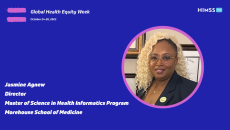
Jasmine Agnew of the Morehouse School of Medicine explains why. As the director of the school's Master of Science in Health Informatics Program, she says its IT instruction also factors in cultural competencies needed to capitalize on SDOH data.

It will start implementing the platform next year.

Technology, clinicians and pharmacies all have key roles to play in dealing with the social determinants of health, say Iris Frye and Nicholas Christiano Jr., co-chairs of Health Equity Policy Task Force under the HIMSS Public Policy Committee.
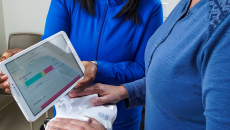
Using bioimpedance spectroscopy for surveillance can trigger early interventions that reverse lymphedema for at-risk breast patients, while wireless localizing devices and oncoplastic radiation markers improve surgery and radiation treatment.

Among other impacts, ending the PHE would represent access challenges and a loss of Medicaid coverage for millions, and would end medication-assisted treatment for opioid use disorder without an in-person exam
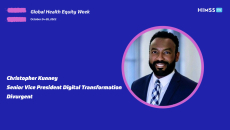
Christopher Kunney, senior VP of digital transformation at Divurgent, explains how age-tech is being deployed for home care as primary care becomes virtual and accessed through nontraditional organizations.
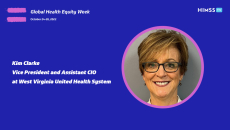
Kim Clarke, assistant CIO at West Virginia United Health System, says even though more than half of WVU hospitals are in rural areas, all patients get the same level of care because of EMRAM Stage 7.

Dr. Nigel Spier, OBGYN and team lead for ModMed OBGYN, explains how adaptive technology can comprehend how physicians manage patients, based on their training and guidelines, and free them up to spend more time with high-touch patients.