Artificial Intelligence
When looking at digitising healthcare, the challenges that European countries are grappling with are vast. While the lack of political direction is one of the main concerns for eHealth professionals in Italy, the UK, Germany and the Netherlands are struggling to hire and retain the right specialists.
This is according to the findings of a new study published by HIMSS today, which looks to shed light on the priorities and challenges faced by European countries.
Earlier this week, Healthcare IT News caught up with Jörg Studzinski, director of research and advisory services at HIMSS, to talk about some of the trends uncovered, and what Europe needs to prioritise in order to digitise faster.
HITN: Why do you believe the Netherlands and the Nordics, including Estonia, are seen as leaders in EU digital health?
Studzinski: We have seen this pattern for many years now. Our study just reconfirms that countries like Estonia, Denmark, Sweden or the Netherlands are perceived to be leading in digital health. I believe many eHealth professionals have recognised that care providers as well as citizens in these countries have easier access to health related data. And that they make more meaningful use of these data, for example by enabling patients to access medical records, to easily renew prescriptions, receive alerts to be revaccinated. Or for care delivery organisations to provide virtual care services in rural areas and to collaborate better together across whole communities and regions.
These countries have been more active over the past few years when looking at investing into comprehensive electronic health records for clinicians and patients, into an IT infrastructure and digitally enabled processes that support the exchange of health information, including the use of globally recognised interoperability standards. And they do now start reaping the benefits of this transformative journey.
As HIMSS, we have held our Annual European conference in Helsinki, Finland this year. One key reason for doing this was exactly related to the strong performance of Nordic countries in eHealth adoption and innovation. Gathering around 3,000 eHealth professionals from across Europe at this event might also have contributed to some degree to shifting attention towards the Nordic countries.
HITN: Findings from the study indicate that improving patient and clinician access to information seems to be a priority in a lot of the countries surveyed. Have you seen any improvements in these areas in the past year?
Studzinski: Yes, there is progress. But it is hard to quantify. Most countries have made progress when it comes to digitising patient records. This can come through implementing newer and more comprehensive electronic medical record systems at the individual provider level, it can happen through rather simple processes relying on scanning, or sometimes this is driven by regional or national programmes that push electronic health information exchanges. In many of the countries that are perceived to be more digitally mature, this progress was pushed and enabled by regional or national initiatives.
HITN: Indeed. But funding remains the key challenge, as in previous years, although it’s interesting to see that the lack of skilled employees is also up there now. Should European countries focus more on digitally upskilling healthcare staff?
Studzinski: Yes, absolutely agree. As in every industry, workforce development should be a key objective of every organisation. This is no different in healthcare and digital health. Improving the competencies of the workforce can lead to significant efficiency gains, higher work satisfaction and improved safety for patients. Ideally this is a combination of process changes and staff trainings. If we give healthcare staff members better digital tools and if we want them to be accountable for their work performance, we need to make sure that they are properly trained, but also that these tools are aligned with internal workflows. A lack of skilled employees can also be reduced, to some extent, by better leveraging the healthcare workforce across care providers and care settings, for example by using more virtual and telehealth-based care services.
HITN: How do these findings differ from those of last year?
Studzinski: Well, our study shows an evolution of current priorities and longer-term trends. Many of the findings from previous years still hold true, such as the focus on patient empowerment, EMR implementations, or health information exchange with external providers.
We also see that funding and interoperability remain critical challenges, and are likely to cause concerns for more years to come. Some of the elements that are new, or at least much stronger expressed this year, are the increased focus on telemedicine, but also a further reinforcement of IT security related aspects. We also found that, according to the self-perception of eHealth professionals, cross-organisational exchange of electronic patient records is happening most frequently in Austria and Italy. And it is mostly used between organisations of the same care type, e.g. hospital to hospital. We were a bit surprised that the Nordic countries have indicated a more moderate usage in this area although they often possess the organisational and technical capabilities to enable this sort of health information exchange. This is something that calls for further investigation.
This year, we included a question about spending levels for digital products and services. While the reported numbers will have to be interpreted with some caution because they are based on estimations from professionals that do not always have insights into the exact accounting figures, it is still intriguing to see that the countries that are perceived to be more digitally mature in eHealth are also those who spend the most on technology.
And finally, we also have a new eHealth champion: the country being perceived to be leading in eHealth adoption and innovation in Europe by most survey participants is now Estonia. Denmark, being number one last year, is now second. But it is still perceived to be the role model from the perspective of healthcare authorities.
Healthcare IT News is a publication of HIMSS Media.
A new report from HIMSS, in cooperation with McKinsey, sheds light on the current state of eHealth in Europe.
In addition to gathering opinions on vendors including Health Catalyst, IBM Watson and Jvion, the research clears up some misconceptions about artificial intelligence systems and offers some best practices for safe and effective deployment.
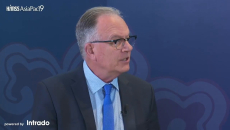
Increased demand is changing the business of hospital management; tech advances around supply chain and machine learning can help, says Peter Faulkner, CEO of Bendigo Health, a large regional health service in Victoria, Australia.
SPONSORED
 |
09:32 pm |
November 03, 2019
|
09:32 pm |
November 03, 2019
|
09:32 pm |
November 03, 2019
At the HIMSS Asia Pac 19 Conference in Bangkok, Thailand in early October, Omar Sunna, Director, Global Product Management, GE Healthcare, shared his insights on some of the data and workflow-related challenges currently faced by healthcare providers and how some of GE’s solutions and applications can help tackle or address some of these issues.
Consuming the right amount of algorithm that creates desired levels of outcomes
Omar said that one of the big challenges for healthcare providers is knowing which algorithm is the most appropriate for the required workloads. Additionally, there is no single vendor that is going to provide all the algorithms and the challenge is to create an ecosystem that allows the provider to work on the algorithms regardless of vendors/developers that can be infused into the workflow.
“We see this as a tremendous opportunity and a challenge today. It is an opportunity for us to partner with customers and solve this issue in a way that is compatible for the workflow, in a way that controls the costs, increases productivity and promote the right levels of access for the patients. Above all, empower for improved outcomes and higher quality care through leveraging intelligent applications and devices,” he explained.
One of the solutions that can tackle this challenge is GE’s Edison AI platform, which focuses on two things. The first is to break the silos of data within the healthcare organisation, to orchestrate the data within the organisation and create a foundation for aggregating the data, making sure that they can look at the patient holistically. The second is to create an ecosystem so that GE developed algorithms as well as ones developed by partners of third parties (such as startups) are able to integrate it into medical devices and leverage Edison's data lake, so the algorithm continues to grow, even though it was developed by a third party company.
“Continuous learning is a big focus because the more you feed the algorithm with data, the more precise and accurate it gets, and that’s the goal with Edison.”
A potential implementation of AI-embedded workflow
One for the opportunities that Omar sees in which AI can help in improving workflows is in the area of radiology, such as to notify the radiologist that there is potentially an urgent need that needs to be done. There are also opportunities to show preliminary findings to the radiologist so that he or she is able to interpret it, review it, look at patient-specific trends based on prior imaging and make the determination of the right diagnosis for that patient in the most efficient manner.
He provided an example of the workflow orchestration maturity model of an imaging interpretation which can be divided into three steps:
1) How to determine the right imaging exam
2) The diagnosis and treatment plan
3) The study interpretation and reporting
In his experience, most of the customers have a fragmented and ad hoc approach and there is an opportunity for quality improvement in terms of the pre-scan algorithm and which protocols are used but most of that are dictated by their jobs in a manual process.
“There’s an opportunity where the data can be leveraged so you need multiple sources of data. Today, a lot of healthcare providers are struggling with being able to access that data from multiple sources.”
Data and data management
There is a data explosion in healthcare – data within the hospital setting in growing at 48% per year and data aggregation is growing as well. From a healthcare technology provider perspective, Omar sees great opportunity to provide solutions for GE’s customers. Within GE’s enterprise solutions business unit, its software applications are divided into three categories: solving for diagnostic speed and accuracy, fostering collaboration outside of the hospital network and focusing on productivity around the health system.
In terms of solving for diagnostic speed and accuracy, one of the software applications and tools is the Centricity Cardio Enterprise, which helps the cardiologist aggregate all the data that is relevant for the patient. The cardiologist can access the ECG, the echo, the cardiac CT and arrive at a diagnosis in a fast time with a higher level of competence.
For fostering collaboration outside the hospital network, such as consulting with specialists and sub-specialists, there needs to be a way to share reports and imaging with them easily and in a secure manner and this is where solutions such as GE’s vendor neutral archive (VNA) and Centricity 360 come into play. Lastly, GE’s analytics solutions that are embedded within the workflow that provides the right level of insights can help improve efficiency of clinicians, help them make the right decisions and lead to an increase in productivity.
Omar believes that the vendor neutrality of GE solutions brings about several benefits. This means that GE’s VNA can adhere to industry standards such HL7 which has the capability of FHIR APIs and the ability to leverage IHE-XDS standards.
“Another aspect of neutrality is being able to leverage the IT ecosystem. Being able to reside in the customer's own hardware, being able to leverage on-prem storage provided by the hospital and being able to open it up to different vendors, as long as we validate the standards of that technology. We also leverage cloud-based storage. All of that is key for us to be able to build scale,” Omar concluded.
The more than two-dozen participants chosen to move on to Stage 1 of the challenge include Accenture, Geisinger, IBM, Mayo Clinic, Merck, Northrop Grumman and others.
The paper, which looked at the development, procurement and use of data-driven technologies for healthcare, was published earlier this week.
The Houston health system is enlisting technology and services help from Virtusa, Cardinal Health and Amazon Web Services to explore ways cloud-based AI can help manage diabetes and subarachnoid hemorrhage.

Hal Wolf, president and CEO of HIMSS, says using AI infused into clinical decision support can provide healthcare professionals and patients/consumers with the right information pathways and treatment plans to enable better care outcomes.

Gyant CEO Pascal Zuta describes how his company's AI platform can help physicians perform tasks only they can do, thus improving workflow.