Analytics
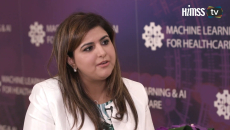
Simer Sodhi, director of data management & analytics at Westchester Medical Center, says the organization integrated data from the EHR using a machine learning algorithm to connect patients to the right sources of care.
Google, the University of Chicago Medical Center and University of Chicago are listed as defendants in a class action suit that alleges they failed to properly de-identify sensitive patient medical data.
WHY IT MATTERS
The complaint, filed by Matt Dinerstein in the U.S. District Court for the Northern District Of Illinois, claims UChicago "promised in its patient admission forms that it would not disclose patients' records to third parties, like Google, for commercial purposes."
Instead, the university "did not notify its patients, let alone obtain their express consent, before turning over their confidential medical records to Google for its own commercial gain," the document states.
The suit alleges that "Google and the university claimed the medical records were de-identified. But that’s incredibly misleading. The records the University provided Google included detailed datestamps and copious free-text notes."
Google's expertise in data mining and artificial intelligence, Dinerstein charges, means it is "uniquely able to determine the identity of almost every medical record the university released."
In addition to seeking monetary compensation, the suit calls for an injunction requiring the University of Chicago to comply with all HIPAA de-identification regulations, enjoining the organization from disclosing identifiable patient medical records to third parties without first obtaining consent.
It also calls for an injunction prohibiting Google from using patient records obtained from U of C and an order requiring Google to delete all patient records received from the university.
Since electronic health records contain patients' highly sensitive and detailed medical records, including records revealing not only a person's height, weight and vital signs, but whether they suffer from certain diseases or have undergone a medical procedure, the University's release of EHR data would be in violation of HIPAA, Dinerstein's suit alleges..
"The personal medical information obtained by Google is the most sensitive and intimate information in an individual's life, and its unauthorized disclosure is far more damaging to an individual's privacy," the lawsuit states.
THE LARGER TREND
The use of de-identified patient data has been common practice for years, but hasn't been without its scrutiny.
Back in 2010, the Office of the National Coordinator for Health IT launched a study on how to manage the privacy risks of using health information that had been stripped of personal identifiers.
Even as researchers and technology developers noted that such de-identified data is a must-have for population health and other purposes, ONC said it was seeking a "consensus on what risk we can tolerate for identification and then what level of removal, what kinds of removal of information, are required to get to that level of risk," then National Coordinator Dr. David Blumenthal told Congress.
More recently, de-identified data has become essential to the training and development of new artificial intelligence algorithms that are impacting every corner of healthcare, including AI technologies such as Google's DeepMind, which the class action suit names as one way the company could more easily "find connections between various data points" and compromise privacy, even with de-identified data.
In 2017, Healthcare IT News reported on a DeepMind initiative, Verifiable Data Audit, that was exploring a blockchain-like service that "could give mathematical assurance about what is happening with each individual piece of personal data, without possibility of falsification or omission."
The goal was to give providers and patients real-time insight into where and how data is being used.
"For example, an organization holding health data can’t simply decide to start carrying out research on patient records being used to provide care, or repurpose a research dataset for some other unapproved use," according to DeepMind.
ON THE RECORD
"We believe our healthcare research could help save lives in the future, which is why we take privacy seriously and follow all relevant rules and regulations in our handling of health data," said Google in a statement responding to the lawsuit.
"In particular, we take compliance with HIPAA seriously, including in the receipt and use of the limited data set provided by the University of Chicago."
Nathan Eddy is a healthcare and technology freelancer based in Berlin.
Email the writer: nathaneddy@gmail.com
Twitter: @dropdeaded209

Infolytx's natural language processing technology is helping with clinical trial cohorts as AI gains real traction across healthcare, explains CEO Badrul Husain.
The CEO says cash raised by the stock offering will help broaden the analytics and data capabilities it can offer its payer and provider customers – and drive innovations in AI, blockchain, robotics and more.
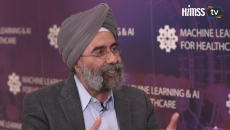
The most promising use case for blockchain in healthcare is the elimination of "redundant work, rework and reconciliation," says Tej Anand, professor of practice at the University of Texas' McCombs School of Business.
With remote patient monitoring a hot topic among healthcare providers, a new survey indicates patients would be open to outfitting themselves with wearable devices if it resulted in fewer trips to visit the doctor.
WHY IT MATTERS
The study of 100 participants ages 40 and over, conducted by connected healthcare solutions provider VivaLNK, found nearly two-thirds (64 percent) would put on a wearable health monitoring device if it meant it reducing the number of trips made to visit a doctor or hospital.
Overall interest in wearables like a Fitbit or the Apple Watch for remote patient monitoring purposes was high, with more than half (55 percent) of respondents noting they would use such a device at home.
THE LARGER TREND
Healthcare organizations see the potential of RMS in combination with telehealth for convenience and cost savings, and many are currently exploring how to adopt it.
In one case, use of an inhaler-connected sensor helped push the average number of COPD-related hospital trips down to an average of 2.2, compared to the year prior to study enrollment (when the average was 3.4), a recent study from the Cleveland Clinic medical center and Propeller Health found.
For another example, ClearSky Medical Diagnostics currently employs Shimmer Research wearables for clinical trials, a partnership that uses Shimmer’s Verisense platform to improve analysis of sensor data for central nervous system diseases.
And among the new products unveiled at HIMSS19 this past February was VitalConnect’s Vista Solution 2.0, which added a weight scale, blood pressure and pulse oximetry and core temperature reader to the existing eight vital sign measurements monitored by the company’s VitalPatch biosensor.
However, there is evidence to suggest the potential benefits of RMS – not to mention the accuracy of certain devices or the security with which sensitive information is stored or transmitted – has not been fully studied.
"Remote patient monitoring … will be increasingly important," Beth Israel Deaconess Medical Center CIO Dr. John Halamka wrote on his blog earlier this year. But while "many thought leaders are convinced that remote patient monitoring improves patient care," he said, "surveys suggest that health-care professionals are still not convinced."
ON THE RECORD
"Remote patient monitoring and the wearable devices that make it possible are not new concepts, but there's more progress that can be made by understanding patient motivations," Jiang Li, CEO of VivaLNK, said in a statement. "While the appointment can't always be avoided, RPM is the key to reducing the time, energy and money it takes to physically visit a doctor's office."
As Li noted and the survey also indicated, costs of the appointment, distance, and disliking healthcare facilities were all top reasons survey respondents gave for wanting to reduce physical visits to the doctor.
"Patients have always disliked visiting the doctor's office, and now there's a way to mitigate that,” Li continued. “This survey highlights what really fuels and drives consumer behavior from a healthcare perspective."
Nathan Eddy is a healthcare and technology freelancer based in Berlin.
Email the writer: nathaneddy@gmail.com
Twitter: @dropdeaded209
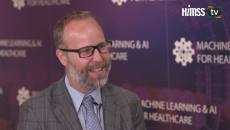
Chad Konchak, assistant vice president of Clinical Analytics at NorthShore University HealthSystem, says the challenge is not so much in the technology development but in the cultural maturity for people to realize what the data can do for them.
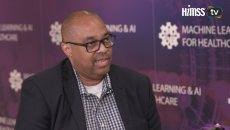
KVC Health Systems CIO Lonnie Johnson describes the predictive modeling goals and first steps toward AI and machine learning of the multi-state provider of foster care and adoption services.
BioBright’s technology, which was initially developed with funds from DARPA, could help enable biomedical companies securely and privately collect and analyze data at scale.

In healthcare, there is a need to improve the speed to an answer without affecting the quality of the answer, says Nigel Hughes, scientific director at Janssen Clinical Innovation.