Quality and Safety

Starting in 2019, Centers for Medicare & Medicaid Services, will change how they pay physicians in a profound way. Unfortunately, the details are complicated and confusing, and many of the particulars have yet to be worked out, which has led many healthcare leaders to glaze over the details and focus on more immediate concerns.

Electronic health records are typically touted as providing two primary and vital services: readily accessible patient records and protection against contraindicated medications. But Intermountain Healthcare is benefiting from a growing and transformative versatility in the application of its EHRs.

The latest video by doctor/rapper ZDoggMD may not win a Grammy, but it likely strikes a chord with clinicians frustrated by the inefficiencies of their EHRs, lack of interoperability, "meaningless abuse" and outdated technology.

Jeff Fuller, Director of Analytics at Carolinas Healthcare System, describes how his organization's approach to analytics started with a research focus on predictive analytics and innovations and has shifted to operational cost control and quality.

Electronic health records are altering nearly every aspect of the caregiver-patient relationship -- not to mention changing caregivers' workflows with omnipresent tablets, handhelds, wall mounts and mobile carts. Today, nurses are on the front lines of this transformation.

In this video from ORSIF, watch the story of internationally renowned cardiovascular surgeon Edward Diethrich, MD, and the life-changing health consequences he has suffered from the chronic, low-level exposure to ionizing radiation in his work.
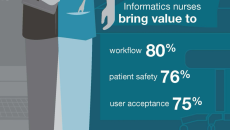
Joyce Sensmeier, Vice President of Informatics at HIMSS, discusses the important role of nursing informatics in healthcare delivery and the results of the 2015 HIMSS Impact of the Informatics Nurse Survey.

Jennifer Horowitz, Senior Director of Research at HIMSS North America, discusses the results from the 26th Annual HIMSS Leadership Survey.

Enough talk about information technology's use in the practice of medicine. Health IT must become the practice of medicine.

The term “patient engagement” returns 565,000 Google search results in less than four-tenths of a second. In contrast, the term “physician engagement” returns roughly one tenth of the total number of results and most are related to hospital or healthcare management practices.