Population Health
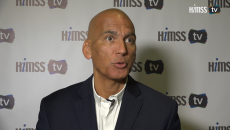
With telemedicine evolving, efforts are underway to provide medical care to refugees in camps using a cloud-based electronic health record built on blockchain, says Brian de Francesca, CEO of Ver2 Digital Medicine.

The government has put in place an AI strategy to improve outcome for patients and clinical staff, says His Excellency Awadh Seghayer Al Ketbi, Assistant Undersecretary for Support Services at Ministry of Health & Prevention in the UAE.

Enabling providers and regulators to focus on patients will improve the quality of care delivered and reduce adverse events, says Michel Amous, regional managing director at InterSystems.
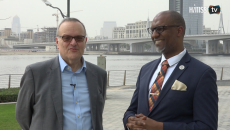
The city's health strategy has ambitious goals, including transforming delivery models without overburdening or burning out clinicians, says Mazin Gadir, senior consultant and advisor with the Dubai Health Authority.

Revenue cycle management, patient and physician engagement, business intelligence and analytics, pop health and a clinically oriented supply chain are key pieces to patient-centered care, says KLAS VP of Business Development Doug Tolley.

At the Health 2.0 Annual Fall Conference, documentary filmmaker Robyn Symon discusses physician burnout and suicide and the need for systemic solutions.
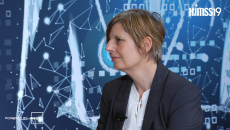
Robin Tenenbaum, IT director, El Rio Community Health Center, shares the importance of earlier screenings for detection of eye disease.

Harvard University’s Stan Shaw and Beth Israel Deaconess Medical Center’s John Halamka detail a new executive education joint venture between Harvard Medical School and HIMSS.

The focus should be on wellcare not healthcare, because finding a condition early results in better outcomes and better costs, says Nick van Terheyden, managing director of Incremental Healthcare.
Population Health
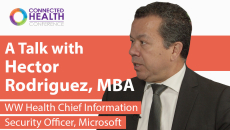
Blockchain won’t solve every health IT problem, so WW Health Chief Health Information Security Officer at Microsoft Hector Rodriguez offers advice for figuring out where it might, and might not, be a fit for you.