Electronic Health Records (EHR, EMR)

Michael Zaroukian, MD, PhD, talks about his unique connection to the Flint water crisis, how population health, analytics and EHR data played roles in its discovery, and what health IT should take away from one popular hypothesis of the incident.

Electronic health records are typically touted as providing two primary and vital services: readily accessible patient records and protection against contraindicated medications. But Intermountain Healthcare is benefiting from a growing and transformative versatility in the application of its EHRs.
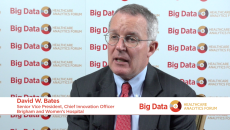
David W. Bates, Senior Vice President and Chief Innovation Officer at Brigham and Women's Hospital offers critical advice to organizations new to analytics and pondering an initial approach.

The latest video by doctor/rapper ZDoggMD may not win a Grammy, but it likely strikes a chord with clinicians frustrated by the inefficiencies of their EHRs, lack of interoperability, "meaningless abuse" and outdated technology.
Meaningful use of analytics to improve quality of care and organizational efficiency is contingent on an accessible user-friendly interface. How can "users" find their way back into the "user experience"?

Rich Schaffer, VP and CIO for St. Clair Hospital in Mt. Lebanon, Pennsylvania, talks about what it means to receive the HIMSS Davies Award.
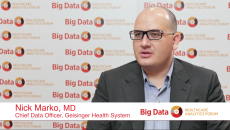
Nick Marko, MD, Chief Data Officer at Geisinger Health System, discusses the nature and purpose of the role of CDO in a healthcare organization.

Health organizations are often moving too quickly from EHR implementation to population health and risk-based contracts, glossing over (or skipping entirely) the crucial step of evaluating the quality of the data they're using.

Eddy Stephens, VP/CIO at Infirmary Health in Mobile, Alabama, talks about the current role of the CIO and how voice recognition software has helped the organization.
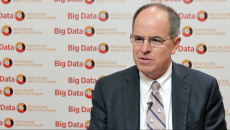
Brian Wells, Associate VP of Health Technology and Academic Computing at Penn Medicine, talks about the PennSeek application and the effort to index and connect different types of data to make it accessible and effective for precision medicine.