Connected Health
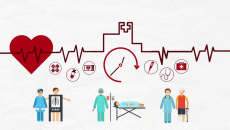
(SPONSORED) Prescription 2: Leveraging Automation to Resume Mission-Critical Applications. Following a disaster, healthcare organizations need to minimize disruption to patient care delivery by ensuring that mission-critical systems get up and running soon after a disaster.
Penn Medicine chief information officer Mike Restuccia reflects on the year that was and glances ahead to 2017.
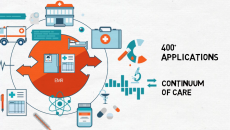
(SPONSORED) Prescription 1: Continuous Availability of All Applications Across the Care Continuum. Develop a disaster recovery plan that enables clinicians to provide patient care without disruption.
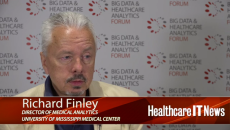
Richard Finley, MD, director of medical analytics at University of Mississippi Medical Center, talks about how the health system tackles risk stratification for remote monitoring.

HIMSS Executive Vice President Carla Smith and PCHA EVP Patricia Mechael caution against applying the phrase to all digital health apps and tools. Instead, executives and innovators should work to align emerging technologies with consumer demand.

Putting patients at the center of preventing mortality from blood clots, and being more aware of them in recognizing their onset, is key to stemming the disease burden. We can do more to engage with information, tools and other patients and programs to help monitor this condition.

I have the pleasure of meeting or speaking with many digital health, health IT, med-tech, and life sciences startups every week.
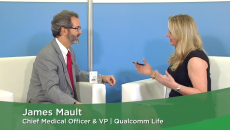
James Mault, Chief Medical Officaer and VP at Qualcomm Life, explains how the transition from a fee-for-service model to a value-based model in healthcare is forcing the industry ahead in adoption of technology, especially as it pertains to connected care.
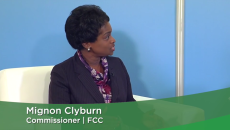
Mignon Clyburn, Commissioner at the FCC, sits down with Healthcare IT News to discuss the FCC's efforts in improving the nation's broadband infrastructure and the positive effects it can have for low-income and remote populations.
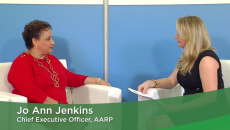
Jo Ann Jenkins, CEO of AARP, talks about the organization's partnership with J.