Clinical
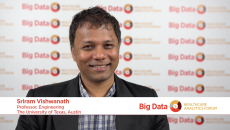
Sriram Vishwanath, professor in data science and informatics at The University of Texas in Austin, TX, discusses the inherent challenges (and significant value) of analyzing healthcare data and using it to predict outcomes.

Thomas Hill Ph.D, Executive Director for Analytics for Dell Statistica Software, explains how historical data can be used to predict risk and how it applies to clinical settings.
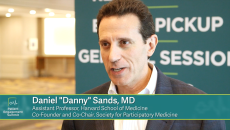
Daniel "Danny" Sands, MD, Assistant Professor at Harvard School of Medicine, talks about participatory medicine at the 2015 Patient Engagement Summit in San Diego, CA.
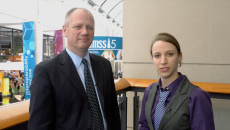
Douglas Van Daele, CMIO and Associate Director at University of Iowa Healthcare, explains the changes his organization underwent to achieve the 2015 Davies Award from HIMSS.
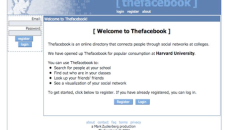
Meaningful use of analytics to improve quality of care and organizational efficiency is contingent on an accessible user-friendly interface. How can "users" find their way back into the "user experience"?

Health organizations are often moving too quickly from EHR implementation to population health and risk-based contracts, glossing over (or skipping entirely) the crucial step of evaluating the quality of the data they're using.
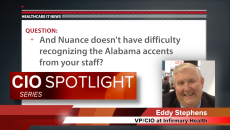
Eddy Stephens, VP/CIO at Infirmary Health in Mobile, Alabama, talks about the current role of the CIO and how voice recognition software has helped the organization.
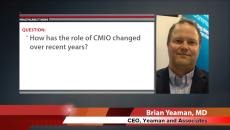
"Being adverse with physicians is something I never really expected to experience as a CMIO," said Brian Yeaman, MD, when asked about how the role has changed over the years.
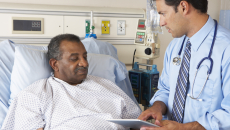
Electronic health records are altering nearly every aspect of the caregiver-patient relationship -- not to mention changing caregivers' workflows with omnipresent tablets, handhelds, wall mounts and mobile carts. Today, nurses are on the front lines of this transformation.
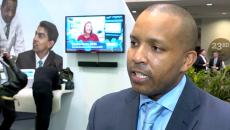
Thomas Mason, MD, discusses his role as chief medical officer at the ONC and how his experience as the ambulatory CMIO and practicing physician at Cook County has aligned with the ONC's work in transforming healthcare delivery.