Accountable Care

Bringing clinical staff in at the ground level ensured analytics tools were properly deployed for the ACO's success, according to Bill Gillis, CIO, and Dr. Sarika Aggarwal, CMO at Beth Israel Deaconess Care Organization.

SPONSORED
 |
01:30 pm |
June 25, 2019
|
01:30 pm |
June 25, 2019
|
01:30 pm |
June 25, 2019
Elena Bonfiglioli, Microsoft's regional business leader of Health and Life Sciences at EMEA, says empowering clinicians through collaboration and coordination is at the core of improving outcomes through personalized care.

New Mexico Hospital Association is pushing data to clinicians so they have informed conversations with patients — rather than operating like TSA agents, says Beth Landon, the organization’s director of policy.

The move to value-based care is a long journey, says David Chou, VP and principal analyst of Constellation Research, who discusses looking at tech mega-trends through a healthcare lens to operationalize them.

The city's health strategy has ambitious goals, including transforming delivery models without overburdening or burning out clinicians, says Mazin Gadir, senior consultant and advisor with the Dubai Health Authority.
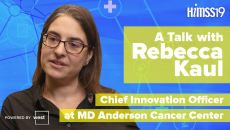
Rebecca Kaul, Chief Innovation Officer at MD Anderson Cancer Center, discusses using technology to give your patients your best, rather than leading with innovative tech that doesn't always solve the big problems.
Workflow
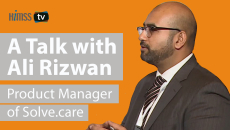
(Sponsored) Blockchain has huge potential to ensure different parties work together and collaborate to deliver high-quality care for patients by providing the optimum platforms for care providers, says Ali Rizwan, product manager for Solve.care.

Workflow
(Sponsored) The AMA's award-winning tools help alleviate the problem of physician burnout, improving clinical workflows and removing patient-care barriers, says Laurie McGraw, SVP of Health Solutions at the AMA.
Revenue Cycle
Anyi Chen, CIO, Staten Island Performing Provider System outlines the challenges of behavioral health data sharing and maximizing the use of real-time data to follow patients within the framework of a value-based care model.

Analytics
Michael Dulin, director for the Academy of Population Health at the University of North Carolina, says the time is now to integrate patient data to develop a comprehensive view of factors that influence outcomes.