EMEA News

In England, the NHS Covid Pass can be downloaded via the NHS app if you are registered with a GP.

SPONSORED
 |
09:22 am |
August 16, 2021
|
09:22 am |
August 16, 2021
|
09:22 am |
August 16, 2021
Engin Demirel, EMEA Head of Product management, Marketing and Sales operations, Customer Solutions at Olympus, explains how telementoring is growing in value, providing many clinical and operational benefits to hospitals.

SPONSORED
 |
06:04 am |
August 16, 2021
|
06:04 am |
August 16, 2021
|
06:04 am |
August 16, 2021
The pandemic triggered a wave of digital transformation, revealing the power of collaboration in solving major provider challenges. A health ecosystem can build on this, enabling innovation and improving care delivery where it matters – for the patient.

SPONSORED
 |
03:56 am |
August 12, 2021
|
03:56 am |
August 12, 2021
|
03:56 am |
August 12, 2021
Jean-Baptiste Michon, product marketing manager at Masimo, discusses how patient monitoring can be a vehicle for putting interoperability at the heart of value-based care.
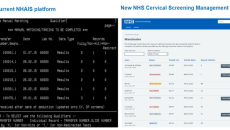
Cervical cancer charity welcomes the ‘long overdue’ update.

International professors and experts have collaborated to help prevent non-communicable diseases (NCDs) through lifestyle navigators and wellbeing apps.

Great Ormond Street Hospital and The Royal Marsden NHS FT have signed an agreement to share a single electronic patient record system (EPR).
New analysts will implement the system at The Royal Marsden with both teams. The Royal Marsden will start the project this August, with a planned launch date of March 2023.
WHY IT MATTERS
The move will enable both teams to benefit from cross-over and shared learning. It will also provide an opportunity for GOSH to expand the planning and development of Epic, the patient record system used by the trust since its introduction in 2017. The partnership will allow Royal Marsden to share the Epic system.
Epic has proved to be particularly beneficial during the pandemic in delivering care to children and young people remotely.
The partnership will also give Royal Marsden the opportunity to harness the digital technologies and learning that GOSH have achieved through their clinically-led implementation of DHR in 2019, opening up both trusts to research opportunities and collaborations.
For GOSH, working in partnership on all future developments to the system means they will be able to work at a faster rate and reduced cost, enabling the trust to invest back into patients and the hospital. By sharing skills and expertise across organisations, both trusts will aim to maximise the benefits of the DHR for staff and patients.
"Overall, the new system will help us access our digital records more easily, work more efficiently, and prescribe more safely – to the benefit of both staff and patients across the trust.”
- Lisa Emery, chief information officer at The Royal Marsden NHS FT
THE LARGER CONTEXT
In September 2020, GOSH became the first hospital in the country to achieve HIMSS Stage 7 validation, which measures a hospital’s digital maturity.
ON THE RECORD
Chief information officer at The Royal Marsden NHS FT, Lisa Emery, told Healthcare IT News: “From quicker access to patient records to improved availability of documentation and a patient portal, the new system we plan to develop in partnership with GOSH will significantly improve patient outcomes, safety and experience.
"It will also give us more access to accurate real-time health information at our fingertips, which will enhance our existing life-saving research capabilities. Overall, the new system will help us access our digital records more easily, work more efficiently, and prescribe more safely – to the benefit of both staff and patients across the trust.”
Matt Shaw, CEO of GOSH, said: “No one at GOSH can imagine life without Epic now and it’s transformed our hospital for the better in the couple of years it’s been in place. We’re really looking forward to working even more closely with another innovative organisation like the Royal Marsden in a way that will benefit even more patients.”

SPONSORED
 |
12:01 pm |
August 09, 2021
|
12:01 pm |
August 09, 2021
|
12:01 pm |
August 09, 2021
The acceleration of digital transformation during the pandemic has opened a new era of opportunity. Nicolas Monsarrat, managing director and digital health lead at Accenture Health, says every company has the potential to be a health business.

SPONSORED
|
06:12 am |
August 09, 2021
|
06:12 am |
August 09, 2021
The delivery of health and care services is undergoing a revolution.
Medical devices, wearables, and remote monitoring technologies are being widely implemented, with the support of advances in artificial intelligence (AI) and advanced analytics.
By gathering critical data in real-time, connected devices can enable healthcare organisations to have a precise and continuous view of their patients, monitor and adapt care pathways and treatments, and rapidly react to prevent complications. But are health systems and workforces ready for this change?
A HIMSS webinar, sponsored by global med tech firm Masimo, examines the challenges and how connected devices could help health organisations reach new levels in digital maturity and improve clinical and financial outcomes.
Connectivity during COVID
There has been high demand for continuous monitoring during the COVID-19 pandemic, according to Masimo Product Marketing Manager, Interoperability & Solutions, Jean-Baptiste Michon.
“We’ve seen that interoperability and digitisation can really help the daily job of caregivers. A few years ago, we introduced the Masimo Patient SafetyNet solution to offer patient surveillance remotely. We are also able to provide smart view with supplemental or duplicate screen outside the room. In the pandemic it’s been really important to have such technology for isolation rooms.”
Mobility solutions have also been deployed to provide clinicians with quick access to patients’ health status during the COVID crisis. These include technology such as tetherless, wearable sensors which can measure temperature or prevent pressure ulcers.
“Patients can wear small devices connected using Bluetooth or wi-fi which allow them to walk around the hospital and the data is collected and sent to the caregiver and the monitoring station,” says Michon.
Clinicians can use specific handheld devices or mobile phones with dedicated apps, which provide remote access to the monitor and can escalate real-time alerts and alarms.
“In this case connectivity is really important because it means that the patient is monitored continuously, even if the caregiver is another room or not in front of the monitoring station,” continues Michon.
The ‘human factor’
Healthcare organisations face two main categories of interoperability challenges, which Michon terms the “human factor” and the “technical factor”.
“I think the first challenge is the human factor. Connectivity is the link between the BioMed environment and IT environment. In the hospital, the BioMed and IT departments have to work together to succeed. They are not two separate teams,” he says.
A further human challenge is supporting clinicians to adapt to the workflow changes that connectivity and interoperability bring.
“We need to support them in this change, and that is part of the project management,” says Michon. “A few years ago, we asked clinicians to move from paper medical records to electronic medical records (EMRs). It was a huge challenge for them, but now they understand that the Eis a real plus.”
Likewise, he argues it is now important to demonstrate the benefits of interoperability to clinicians.
“We’re trying to make their daily lives easier by collecting data automatically. In fact, patients, caregivers, nurses, the IT department and BioMed will all win something in interoperability projects,” he adds.
Technical Challenges
Healthcare organisations must also negotiate the technical challenge of connecting devices to various systems.
“We have many different ways to connect and to collect the data. Platforms like Masimo’s automation solution can help because they are able to connect nearly any kind of device” says Michon.
Joining the puzzle pieces
If they are to optimise the use of connected devices, Michon believes organisations must move towards value-based healthcare environments.
“I like to focus on the budget, on the cost and on the ROI because we need to be 100% sure that today and tomorrow, we are able to connect all the devices in the hospital,” he explains. “Interoperability is not just one product, this is really about creating and providing solutions. It’s like puzzle pieces - all the pieces of the puzzle can standalone, but they can also be plugged together. It’s the same for interoperability solutions and value-based healthcare.”
Looking to the future
In the future, Michon predicts that continuous monitoring will become standard not just in Intensive Care Units (ICUs), but to simplify the daily job of caregivers in all hospital wards.
“Masimo’s interoperability systems can provide a real solution to connect any device, to integrate and to standardize the data. Standards are the way we communicate and how we understand each other.”
However, he adds that even proprietary protocols used by some manufacturers can use this dedicated platform to collect and send data in real-time to third parties.
“The third party could be an EMR or a PDMS, an alarm management system or maybe a database for analysis purposes or for AI. People are connecting devices both in the hospital and outside the hospital. As a patient or as a consumer for example, I can connect my own medical devices my own sensor to my mobile phone. This is not the future, this is happening today. Connecting devices is standard now.”
These topics and more are discussed by health, information and technology experts in the HIMSS webinar. It offers the opportunity to learn about the state of play for the integration of connected devices data into EHRs and clinicians’ workflows, plus strategies and best practices to promote clinician engagement.
The webinar also examines the importance of the interoperability of connected devices to build an efficient digital continuum of care and integrate new data source insights into clinical pathways.
“Interoperability is key in the hospital environment for IT and for biomed. This is mandatory now. It’s common. It used to be a static frontier, with two different words, we’re now pushing this frontier. In fact, we see that there is no frontier anymore,” concludes Michon.
Find out more in the webinar: Connected devices: Pushing the frontiers of interoperability

News comes as the United Arab Emirates capital gets ready to introduce further restrictions of movement for non-vaccinated residents.