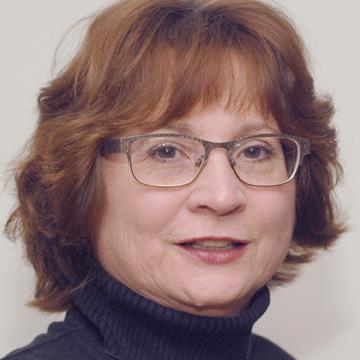
Susan Morse
"We think every problem can be solved with machine learning," says one AI and analytics expert. "That’s not the case."
Cynthia Sikina, vice president of Financial Services with consulting firm Afia, works with healthcare providers to optimize financial operations, not by having a technology background, but in being able to accurately translate a client’s needs to the IT department.
“I’ve had so many rewarding experiences with the data team, providing key subject matter context for understanding the client's needs,” Sikina said. “When you tweak content for the EHR, it’s so critically important to make sure you end up with what you intended.”
The IT professionals take her ideas for client needs and turn them into solutions.
“Everything that I do in helping our clients is all dependent on technology,” Sikina said. “I am not a technology person, but what I find is a lethal combination is pairing up somebody like me with some of our data engineers, who can actually create a dashboard or monitoring report; turn it into information to help clients manage their businesses.”
When she joined Afia five years ago, the company was in the EHR implementation space. Sikina took on revenue cycle, creating the metrics for a healthcare provider to evaluate the successf of its financial operations. Now she’s helping organizations optimize their use of their EHR to support best practice.
“It doesn’t matter how good your services are,” she said. “If you don’t bill and collect the right amount, you’re going to have an issue with financial performance. For me the next initiative is going to be on cost of service. It’s amazing the type of excitement it generates. It arms clients with the information they need to negotiate reimbursement rates, evaluate the profitbility of their programs and service offerings, and can influences program investment decisions.”
‘A HUGE LEAP’
Through her career, Sikina has seen a lot of changes: in the city of Detroit where she grew up, on the technology side, and in being a woman in the IT space.
She majored in accounting, never intending to use her skills in healthcare.
Getting there required a huge leap, she said.
“I knew nothing, I knew nothing about healthcare,” Sikina said. “There was a steep learning curve.”
BACKGROUND
Sikina went to the University of Michigan where she received her undergraduate degree in business and accounting, and then her MBA.
Of her choice of major, Sikina said she fell into it, more than anything.
It turned out she was good at it while at the same time not liking strictly being an accountant.
“At the time, getting into public accounting track was a popular career path,” she said. “I went in that direction, but I really didn’t care for it.”
Out of college, she went to work for the defense company, Textron, doing accounting and cost analysis, making full use of her degree. In order to get promoted, she would have to relocate out of state, so she decided to look for another job in Michigan.
“I looked for an industry that provided a fundamental service that would not go away, large enough to get promoted from within,” Sikina said.
Healthcare fit all of those requirements. She landed at the University of Michigan Medical School, responsible for a $150 million billing operation and the financial reporting for the Department of Surgery. But even tougher than the financial challenge was gaining the respect of the physicians with whom she worked.
“They’re tough. I was in my late 30s. I was young, I was female and I wasn’t a physician. And I was working for the Department of Surgery. That was three strikes against it,” she said. “In that day and age, it did make a difference. I had to work a lot harder to earn their respect.”
Her job titles included finance director at the Department of Surgery and director of Finance for the dean’s office in the medical school.
“When I left the Department of Surgery, they presented me with a chair, a physical chair, a wooden chair. It’s engraved with your name and years of tenure there. Those chairs were always given to faculty. It was quite an honor. It meant the world to me,” she said. “It was a clear indication I had earned their respect."
Sikina has also worked for a physician’s group at Wayne State University and then switched sides to the hospital environment, where she gained the perspective of the difference between managing costs for both types of providers.
She brought these experiences to her consulting work with Afia in Ann Arbor.
WHIT
Sikina said she has always felt strongly about pursuing higher education. That was ingrained from her father, who held an executive position at Chrysler.
Sikina said she is optimistic about the future of women in healthcare leadership positions. While, woman still only make up around 35 percent of hospital executive positions, according to Rock Health, this number is higher than in other industries.
“I’m pleased to report being female doesn’t matter anymore,” Sikina said. “I know there are income disparities, I know all of that is out there. There is probably less of it in healthcare and IT than you see in other industries. Females have been dominant leaders for a long time.”
Her recommendation for women, and men, entering the field is: “I always do the right thing. If you follow that morale compass, you can’t go astray.”
The pharmaceutical industry’s biggest barrier? Data, of course.
There’s a challenge being the only woman in a room of health IT executives, says Agio’s Compliance …
Before finding her niche in cybersecurity, Agio Compliance Director Deana Fuller found herself in a situation familiar to many.
She had dreams growing up of becoming a teacher or an attorney, yet found herself working in a profession where she didn’t belong. It was in sub-prime finance, earning bonuses for selling cars that had been repossessed.
“My boss told me I needed to be more motivated,” Fuller said. “He said, in five years, you could become a branch manager making $50,000. This was the most motivating thing he could have said.”
Fuller’s motivation carried her through several degrees. After getting a bachelor’s degree in English in 1992, she earned an MBA in 2002 and then went to the University of South Dakota School of Law.
“I wanted to make more money and do more things,” she said.
She found, during a class on administrative law, that she was very good at culling and deciphering information from complicated reports.
When she went to work in 2009 for a primary care association as a business development director coordinating group purchasing, her boss asked her to read an Office of the National Coordinator report that had just come out. It was the 700-page ONC report on meaningful use.
“My employer said, ‘Read this and tell us what it says,’” she said.
She did, and her career moved in the direction of healthcare technology, privacy and security.
Fuller has worked as a HIPAA privacy consultant, senior security and privacy compliance analyst, and adjunct professor teaching courses in health information technology management and healthcare law.
She is a former senior consultant for A-LIGN, doing General Data Protection Regulation, or GDPR, gap readiness assessments, HIPAA and HITECH services and HITRUST assessments.
Last year, when Agio needed someone to come in to build up the HITRUST program, Fuller became compliance director and associate director of Cyber Security Compliance, managing data protection. The company offers integrated managed IT and cybersecurity services to the financial services, healthcare and payments industries.
WOMEN IN HEALTH IT
A woman in the field of healthcare IT may find herself surrounded by men, Fuller said during HIMSS19 last month in Orlando, Florida. Fuller makes her home in Sioux Falls, South Dakota.
“We are the minority,” she said. “We need more people, more diversity, other people’s opinions. I think we have more technical acumen than we have been given credit for.”
Her recommendations for achievement can be found on her desk, she said.
There sits an inspirational talisman of sorts, a plastic, miniature velociraptor that sends the visual message to “collaborate, then attack,” she said. “We can accomplish just about anything when we work together and support one another’s efforts to grow, learn and bring change.”
There’s also a “no” button, a “sorry I’m late, I didn’t want to come” pencil holder that tells her to take ownership of her mistakes and a shot glass from “Hamilton” that serves as a reminder not to throw away what could be your best shot for success.
“Don’t walk away from an opportunity because it scares you,” Fuller said. “Finally, I would say to honor your team. Without my team, I wouldn’t have had the opportunities or success I have enjoyed.”
Twitter: @SusanJMorse
Email the writer: susan.morse@himssmedia.com
The worldwide committee has seen small steps in diversity inclusion, and wants to see leaps.