Mike Miliard

University of Utah Health, Regenstrief Institute and Hitachi this past week announced the development of a new artificial intelligence approach that could help improve treatment for patients with Type 2 diabetes mellitus.
WHY IT MATTERS
Researchers from all three organizations collaborated to develop and test a new AI approach to analyzing electronic health record data across Utah and Indiana. As they did, they uncovered some patterns for Type 2 diabetes patients with similar characteristics.
Those hope is that those treatment patterns can now be used to help determine an optimal drug regimen for a specific patient.
University of Utah researchers had worked with Hitachi for several years to develop a pharmacotherapy selection system for diabetes treatment, but a lack of sufficient data meant that it wasn't always able to accurately predict more complex and less prevalent treatment patterns.
It also wasn't easy to use data from multiple facilities, researchers said, because it was necessary to account for differences in disease states and therapeutics prescribed across regions.
So U of U researchers collaborated with Regenstrief experts to enrich the data it was working with – enabling a AI-based approach that first groups patients with similar disease states, then analyzes treatment patterns and clinical outcomes.
The model then matches specific patients to the disease state groups – predicting a range of potential outcomes, depending on different treatment options.
Researchers assessed how well this method worked in predicting successful outcomes given drug regimens administered to patients with diabetes in Utah and Indiana.
Their findings showed the algorithm was able to support medication selection for more than 83% of patients, even when two or more medications were used together.
More detailed results from the study are published in the peer-reviewed Journal of Biomedical Informatics.
U of U and Regenstrief will continue work on evaluating and improving the efficacy of these models, with help from Hitachi's health IT business divisions and R&D group.
THE LARGER TREND
While 10% adults worldwide have been diagnosed with Type 2 diabetes, these researchers note, a smaller percentage require multiple medications to control blood glucose levels and avoid serious complications, such as loss of vision and kidney disease.
For this group of patients, physicians may have limited clinical decision-making experience or evidence-based guidance for choosing drug combinations, researchers note. It's hoped that this new AI-enabled clinical approach can help patients who require complex treatment in checking the efficacy of various drug combinations.
At HIMSS22 this past months, hospital CIOs offered their insights on how AI and machine are helping uncover hidden insights in EHR data.
Artificial intelligence is increasingly proving its mettle for diagnostics and treatment as approaches to managing diabetes and other chronic conditions evolve.
The American Diabetes Association, for instance, recognizes use of some autonomous AI applications, such as screening tools for diabetic retinopathy, and says they meet the standard of care.
Meanwhile, health systems are finding new successes using telehealth and remote patient monitoring for diabetes management.
ON THE RECORD
"Based on our findings, future progress in techniques for developing models using data from multiple sources, especially when sample sizes of individual sources are small, has the potential to contribute to improved clinical decision support," said researchers in the Journal of Biomedical Informatics.
"At the same time, it is important to develop the infrastructure and processes that allow technologies such as distributed learning, which can provide predictive performance equivalent to integrating source data, to be implemented as easily as integrating models. Last, prediction models such as those we describe here should be evaluated in clinical practice regarding acceptability and impact."
Twitter: @MikeMiliardHITN
Email the writer: mike.miliard@himssmedia.com
Healthcare IT News is a HIMSS publication.
The bipartisan bill would put in place baseline cybersecurity requirements for device manufacturers applying for FDA approval and require plans to monitor and address post-market vulnerabilities.

The $100,000 grant will enable purchase of camera and microphones to help caregivers spot signs of trouble in hospital rooms and intervene when necessary.

The Telehealth Benefit Expansion for Workers Act would amend HIPAA and the Affordable Care Act to allow employers to offer standalone telehealth service programs – not unlike dental and vision plans – in addition to existing health insurance plans.

Novant Health Enterprises will focus first on three areas: clinical transformation, expansion into non-acute settings and technology commercialization.
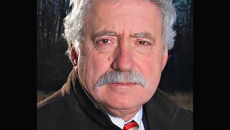
Dave Garets, whose four decades of experience in healthcare and technology included work as a technical specialist at AT&T, a hospital chief information officer, a management consultant and early leadership at HIMSS Analytics, died Monday at age 73.
He passed away March 28, following a long battle with Parkinson's disease.
Garets, whose work at AT&T in the 1980s was followed by years as CIO of Magic Valley Regional Medical Center in Idaho in the 1990s, was a visionary who saw the immense potential of information and technology to improve care delivery.
He was an early proselytizer about the value of electronic health records – but also warned about the importance of ensuring they're implemented effectively. He also foresaw the evolving role of the healthcare CIO over the past decade or so, into "a business person as opposed to a technology person."
As a remembrance posted by HIMSS explained, "Dave believed that if technology was uniformly adopted in healthcare, then caring for patients would be greatly enhanced and outcomes would improve and become more predictable.
"Two ideas formed from his healthcare IT experience. One was that the technology had to meet certain standards because healthcare IT affects people's lives. The second idea was that healthcare IT had to be universally adopted to obtain the maximum benefit to society."
His term as HIMSS board chair "took the entire health information technology sector in new directions that shaped HIT adoption trends and federal HIT policy for more than a decade," according to HIMSS (parent company of Healthcare IT News).
In 2004, Garets was chosen to lead the new HIMSS Analytics division.
There, he co-developed its EMR Adoption Model, which over the past two decades has been the go-to assessment to benchmark health IT implementation and use in hospitals and ambulatory practices. His promotion of EMRAM in the U.S. and throughout the world was instrumental in helping drive uptake and effective deployment of technology at health systems large and small.
In 2011, Garets was voted one of the 50 most valuable contributors to health IT in the past half-century by HIMSS boards of directors.
His other professional experience includes tenures at CHIME, Gartner, The Advisory Board Company, Mountain Summit Advisors, and other healthcare and technology organizations.
"Dave was an incredible leader, pioneer and advocate for the power of information and technology to transform healthcare," said Hal Wolf, president and CEO of HIMSS.
"As we work to reimagine health and health equity for all, we stand on the shoulders of giants like Dave. He often said, 'We’re always better together than separate in the battle of care.' The global health ecosystem has lost a great visionary in Dave, but we will continue to benefit from his tremendous contributions for years to come."
The cloud-based platform will help drive faster and more efficient research by automating data management, enabling predictive forecasts and more.

Two are part of its Right of Access initiative – bringing the number of cases to 27 since the project began – and two stem from impermissible disclosure of protected health information.

Google Cloud's Aashima Gupta and Joe Miles discuss the future of hybrid care, what COVID-19 revealed about data silos and how technology can strengthen connections between people.
The new $550,000 program will help fund organizations pursuing new technologies and strategies for nationwide health data exchange and building new connectivity tools.