
HIMSS TV

Changing EHRs is a dreaded task for IT leaders and workers, and for clinicians used to the previous system. Oklahoma Heart Hospital CIO David Miles and his team did it – and offer guidance to peers facing the same challenge.

Oklahoma Heart Hospital's David Miles talks all-digital's impact on care delivery, patient experience and healthcare outcomes – and much more.

SMC Telogorejo Hospital has introduced a chatbot as part of its contact centre, which was found to be particularly helpful for its senior patients, notes president director Dr Alice Sutedjo Lisa.

Dr. Benoit Desjardins, professor at the University of Montreal, explains that attacks haven't changed. The interconnectedness of hospitals with each other and third parties means that, when one is impacted, the entire health system can be affected.

George Pappas, healthcare cybersecurity expert and CEO of Intraprise Health, says HIPAA is just a baseline for new state regulations that include incident reporting within 72 hours.
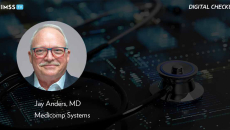
Nearly half of FDA-approved AI medical devices haven't been trained on real patient data. Dr. Jay Anders, chief medical officer at Medicomp Systems, offers solutions to this challenge, and explains problems with using synthetic data.
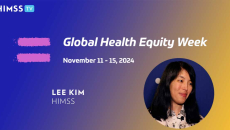
For Global Health Equity Week, HIMSS senior principal of cybersecurity and privacy Lee Kim describes some of the ways how privacy and security intersect with health access and patient engagement – and how artificial intelligence can help.
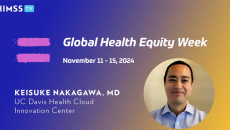
For Global Health Equity Week, Dr. Keisuke Nakagawa, director of innovation at UC Davis Health and co-chair of the HIMSS SDOH Committee, explains how AI is transforming how social and digital determinant information is incorporated and surfaced.
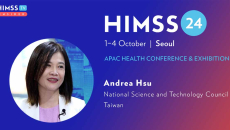
At the helm of Taiwan's national smart health project, the National Science and Technology Council facilitates partnerships between university hospitals and the ICT industry. Andrea Hsu, director general at the agency, discusses.
For Global Health Equity Week, HIMSS senior director of government relations Valerie Rogers explains how state and federal policies, along with IT innovations that promote data modernization and exchange, are improving perinatal health outcomes.