
Armin Scheuer
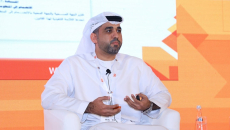
Raising digital maturity in the Middle East is a key focus in many GCC markets and HIMSS has therefore announced a high-level Dubai CIO Summit, on 23 January 2022, to drive regional and international exchange in support of ongoing digital maturity initiatives.
Germany will soon be embarking on a national project to assess the digital maturity of its 2,000 hospitals. If it focuses on understanding the impact on clinicians and patients, it can catch up with the world’s digital health leaders, says Armin Scheuer, VP international business development, HIMSS.
The Health Innovation Hub will be the Ministry's bridge to the "digital scene," said health minister Jens Spahn.
Digital transformation is not reaching the patients yet – this is the key result of an international comparative study published by German foundation Bertelsmann Stiftung towards the end of November.
In the study, Germany scores low and ranks 16th out of 17 countries surveyed worldwide regarding the digitization of their healthcare systems.
Estonia, Canada, Denmark, Israel and Spain are in the first ranks of the comparison.
The study finds that one of the major barriers to digital health adoption in Germany is the lack of a national coordination agency.
“Politicians have in the past delegated the responsibility for digital transformation to self-government in health care," says Thomas Kostera, study director and health expert of the foundation. "The protagonists have been blocking each other for a long time and it has not yet been possible to bring all those responsible behind a common goal."
Webinar: Patient Engagement: Transforming the Patient Experience with Innovative Digital Services
Recently, health policy has strengthened its leadership role and some advancements, such as the introduction of telemedicine for remote treatment, have been made.
The Bertelsmann Stiftung recommends politicians engage citizens, doctors and other health professionals to encourage digital health adoption. Users, such as patients and physicians, should be actively involved in developing sub-strategies and digital applications and processes, to ensure benefits become visible at an early stage.
Study unveils great uncertainty about opportunities and risks of digital health care
The Bertelsmann recommendation is underlined by the results of a representative survey by Nuance Communications among more than 2,000 people in Germany. This survey shows, that there is great uncertainty regarding risks and opportunities of digital health among citizens; only 26 percent of respondents feel sufficiently informed.
A total of 77 percent of respondents said that they did not have enough digital literacy in the health sector or were unable to assess whether there was any need to catch up.
"In Germany, there was no campaign that has extensively informed about the use of digital technologies in health care; the discussion remains in industry and expert circles. The good news is, that the population shows a high willingness to deal with digitalisation – which is essential to reach the government’s target of electronic health records for everyone by 2021," says Martin Eberhart, general manager of Nuance Healthcare for the DACH region.
More than 70 percent of citizens are willing to actively seek a higher digital literacy for their health care, as they expect much better chances of recovery from a digital healthcare system and more time for doctor-patient communication. They demand to be actively informed on digital health by their doctors, health insurance or through reliable education services.
Jörg Studzinski, director research and advisory services at HIMSS Analytics Europe, demands a broad discussion as well as education and awareness campaigns.
“Patients elsewhere have noticeably more opportunities to actively and informedly look after their own health care through digital technologies. Therefore politics, associations, health care institutions, the medical profession and technology providers must work together to increase transparency, understanding and speed.
"The fact that many citizens do not feel sufficiently informed reflects our experience in hospitals. Even in health care facilities, there is still no comprehensive understanding of the opportunities and risks of digital health," he said.
With the commissioning of the telematics infrastructure, an important step has been taken towards a forward-looking healthcare system. Around 225,000 doctors, dentists, hospitals, psychotherapists and other health care professionals will be securely networked in the future.
Armin Scheuer is a digital health expert and consultant, and a former HIMSS Vice President.
How can European citizens be given union-wide, secure access to their health data? And how can Member States collaborate on the secure and authorised access to national genome databases?
At the recent European Data Summit in Berlin, organised by the Konrad-Adenauer-Foundation, a breakfast session supported by HIMSS Europe saw experts tackle these issues, with Marco Marsella, Head of the eHealth, Well-Being, and Ageing Unit from the European Commission, presenting their plans to support Member States in enabling cross-border health data exchange and facilitating the secondary use of patient data for research purposes in the field of genomics. Marsella said there was no need for new standards, arguing that the focus now had to shift to adopting existing standards to facilitate cross border eHealth.
The European Commission already supports a variety of initiatives in these areas, including the European Reference Networks for Rare Diseases or pilot projects to exchange patient summaries and e-prescriptions across national borders.
“Most of the EU Member States and governments seem to be willing to support these initiatives; but some are more successful than others to promote health information exchange across the care continuum and to enable their citizens to access their health records”, said Jörg Studzinski, Director Research and Advisory Services at HIMSS Analytics, who participated in the meeting.
“It will be important to create more agile, effective and efficient governing structures and legal frameworks to provide the necessary push in this area – in particular within Germany."
Germany aims for national EHRs by 2021
Niklas Kramer, from the German Federal Ministry of Health, admitted that Germany has not been very successful in digitising its health services. The current government, however, has outlined an eHealth strategy aimed at adopting the country’s Health Telematics Infrastructure for information exchange and introducing nationwide electronic health records by 2021.
But the complexity of the project, looking at the accessibility, sharing, and use of health data, was highlighted by the panel. The German research community, for instance, is getting increasingly frustrated over the legislative barriers regarding the use of big data, at a time their peers in other countries are making significant scientific progress in this field.
“eHealth policy should be key part of the eGovernment modernization efforts and Germany should follow the Estonian and Nordic approach when it comes to free flow of data, research and health treatment. As for the European Genomics Declaration, it would be great to see Germany joining forces with other Member States to link genomic databases across borders”, said Dr Pencho Kuzev, Data and Digital Policy Coordinator at the Konrad-Adenauer-Foundation.
“There is a clear commitment and guidance from the European Commission to facilitate a multi-stakeholder approach to make cross border healthcare a reality and overcome the current technical gaps and challenges when it comes to exchanging data”, added Anett Molnar, Senior Manager, Public Policy and Engagement at HIMSS Europe.
“HIMSS and HIMSS Analytics are prepared to support the European Commission and Member States through opinion exchange, workshops and research initiatives and jointly further the mission to transform healthcare through the use of information and technology.”
For nearly 2,000 care workers in Stockholm, a smart phone has become the most important tool in their daily operations. The goal is to make life easier for care workers and care providers and to give relatives access to various eServices that are provided via the city's website. City officials presented the solution in a World of Health IT session during the pan-European eHealth Week 2012 in Denmark.
Although health ICT investments in Italy are expected to have increased by 17 percent this year, most hospital directors remain skeptical as to whether IT investments are sustainable, according to Tommaso Piazza, Chief Information Officer of ISMETT, speaking at the HIMSS Europe Health IT Leadership Summit in Rome.
In his welcome speech to attendees of the inaugural HIMSS Europe Health IT Leadership Summit in Rome, Italy, Steve Lieber, CEO of HIMSS, said that CIOs must ensure that "staff quickly adapt to new technologies and new IT solutions."
Hyderabad’s airport is a symbol of India’s economic success: organized, modern, efficient. The city is host to this year’s eIndia, the country’s largest ICT event – with a dedicated track on eHealth. The question is, what are the opportunities for eHealth in India? I am here to find out.