ANZ News

Also, Dunedin Hospital has developed online care plans using SHI Global's Go Well Health platform.

The IT specialist will focus on enabling digital technology integrations in the hospital.

This week's Budget will boost digital uptake and cybersecurity, but doctors' groups say it failed to provide the funding the COVID-19 fatigued health system needs.

Fast, reliable and high capacity 5G mobile networks can deliver improved remote care and data analytics in Australia, but only a third of health businesses are harnessing the technology.
Also, latest insights have shown that Australian health information managers have seen gradual increases in their average salary.
The government’s new cybersecurity bill could add millions of dollars to the budgets of hospitals already contending with the price of COVID-19.
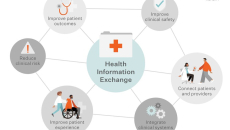
The system is expected to house the health data of over 50 million people in the Kingdom.
The rollout of eTOC continues across the state, with eHealth NSW's head Dr Zoran Bolevich saying it improves clinical productivity and patient care.

After two years of astonishingly low COVID-19 levels, New Zealand is dealing with a wave of Omicron cases and a new government COVID-19 care platform has been adding to the burden for GPs.
As the controversy over the Covid Clinical Care Module (CCCM) grew in tandem with the surge in COVID-19 cases, in early March the Ministry of Health conceded there were "issues with the speed" of the shared care record system used by GPs and other health providers.
"Depending on demand, the links between other systems and the CCCM are not always providing a real-time view about people with COVID-19 that require support," a ministry statement said.
"During the past 10 days, the increasing number of cases and multiple concurrent changes to IT systems that support the care of COVID-19 cases has resulted in intermittent delays in notifying cases."
WHY IT MATTERS
Originally developed to manage care in quarantine and isolation COVID-19 cases, the CCCM now allows general practices, rural community hubs and other relevant healthcare providers to access patient information to enable coordinated care.
It integrates with the National Contact Tracing Solution, which automatically creates a record for every COVID-19 case in the CCCM, and the Ministry of Social Development’s Community Portal. GPs access the portal via their practice management systems.
But General Practitioner Council chair Vanessa Weenink told eHealthNews.nz there had been a "cacophony of complaints" from GPs about the CCCM.
"The system has not been built for the people working on the frontline and the implementation of it has very much alienated GPs," Dr Weenink said.
ON THE RECORD
Michael Dreyer, the Ministry’s group manager of data and digital, said in a media conference that a "large amount of new technology" had been rapidly released to help contend with the Omicron variant's spread.
"These systems were designed, developed, tested and delivered at pace. However, with all new IT systems there are initial bugs and process flows to sort out."
He said the ministry is "constantly refining our systems, taking on board feedback from our health workers and our health consumers".
Dreyer said since the CCCM's go live in the middle of February, its capacity has been boosted from processing about 4000 cases an hour to 20,000.
The Ministry of Health's primary care lead, Dr Joe Bourne, responded to the concerns of GPs by acknowledging the pressures being created by the CCCM.
"We know the sharp increase in cases has caused a significant increase in workload for general practice, and that the concurrent implementation of a new digital system is challenging. This means that practices have little time for training and familiarising themselves with the tool," Dr Bourne wrote.
"We also understand that much of the workflow within CCCM is additional to healthcare professionals’ requirements and, as a result, its use is seen by many primary care clinicians as limited in its current configuration. It also takes 2-4 hours from when a new positive test result is reported to generate a [CCCM] record.
Dr Bourne said improvements to the system are being made.
"We are reducing this time as quickly as we are able, but it is likely in the medium term rather than immediately. We are working hard to improve the system, to make it more user friendly and add to its value."
THE LARGER CONTEXT
The scale of this surge is certainly considerable in New Zealand terms. The nation's pandemic response has been hailed globally at times over the last two years as an exemplar for its low COVID-19 statistics – both cases and deaths – as a result of the government’s "go hard, go early" approach to lockdowns, the community's willingness to adhere to restrictions and geographic isolation.
But the country’s current COVID-19 crisis continues to grow. Yesterday, ten COVID-19-related deaths were announced. More than 19,500 new community cases of COVID-19were recorded in the previous 24 hours, and 930 people were hospitalised, including 23 in intensive care.
94 per cent of New Zealanders aged 12 and above are fully vaccinated.
The United States Centers for Disease Control and Prevention has this week urged Americans to avoid travel to New Zealand as a result of the surge.

The surveyed companies overwhelmingly reported that the federal government stifles innovation.