ANZ News
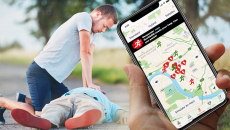
The GoodSAM app alerts responders to provide first aid to nearby individuals in cardiac arrest.

To be carried out over the next two years, the plan seeks to equip health workers with skills in delivering virtual care.
Also, Shaun Drummond has formally taken on the role of director-general at Queensland Health.
The system will be rolled out first at King Edward Memorial Hospital in Perth.
![[Left-Right] Tim Kelsey, CEO, Beamtree and Mohanned AlRasheed, CEO, Lean at the signing of the partnership agreement in Riyadh](/sites/hitn/files/styles/230x130/public/2025-07/Lean-Beamtree-LinkedIn-Post-Photo-crop_3.jpeg?itok=jiE7NlWh)
Beamtree signs partnership to deploy AI data, decision support solutions in Saudi's public hospitals
Its solutions are targeted to be implemented in over 450 hospitals across the kingdom.

The service is now being rolled out in more than 120 residential aged care facilities.

Pinnacle Midlands Health Network has confirmed a data leak following its report of an IT breach on 28 September.
In an update on 9 October, the network said malicious actors have uploaded to the internet information and data "related to past and present patients and customers" of the Pinnacle group in Waikato, Lakes, Taranaki and Tairāwhiti districts, including GP practices under Primary Health Care.
Pinnacle CEO Justin Butcher said that "much of the information and data that was stolen last week has been made public."
"While Pinnacle does not hold GP notes and consultation records, we now have a much clearer understanding of the breadth of stolen data. This includes high-level data related to the use of hospital services, claiming information related to services that Pinnacle provides, and information sent to practices around immunisation and screening status of individual patients," he explained.
"This is extremely unfortunate, and we are gutted as this impacts our whānau also. Cyber incidents like this are a constant threat, and while they are the doing of malicious actors, we feel for everyone who may have been affected," the network's official added.
Pinnacle said they are in contact with the police and the Office of the Privacy Commissioner.
THE LARGER CONTEXT
Two weeks ago, Pinnacle immediately took its IT system offline upon identifying a breach.
In a statement, Te Whatu Ora, which is assisting in the investigations, maintained that the cyberattack is "no indication of a threat to Te Whatu Ora networks" as its system is separate from Pinnacle.
Meanwhile, the network, which serves about 450,000 patients in 87 practices, has tapped IDCare for people specialist support to individuals who are believed to be at high risk due to the exposure of their information.

It is part of the Victorian government's latest hospital infrastructure project.

The Pinnacle Midlands Health Network flagged an IT breach on 28 September.
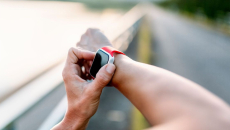
Wearables have become increasingly popular among consumers, with about one in five Australians sporting one on their wrists. The skyrocketing success of these gadgets suggests more people are taking an interest in managing their health and wellbeing, monitoring activity levels and other health metrics.
These days, wearables can collect a multitude of measurements, from the basic step count to ones as detailed as oxygen saturation, energy expenditure, blood pressure and sleep patterns.
But how accurate are these measurements? And what role do they play in healthcare?
Wearables – a reliable source of health data?
A recent study investigated the accuracy of the Apple Watch 6, Polar Vantage V and Fitbit Sense on 60 healthy young adults for heart rate and energy expenditure during activities like sitting, walking, running, resistance exercises and cycling.
It found that the Apple Watch 6 had the highest level of accuracy for heart rate monitoring across all activities, whereas the Polar Vantage V and the Fitbit Sense had varying degrees of accuracy from high to poor. Similar results have been seen by Fuller, D. et al. (2020) and Shcherbina A., et al. (2017).
To measure heart rate, trackers are commonly equipped with light sensors like a photoplethysmography (PPG) sensor, which measures beats per minute by detecting blood flow - in between beats, there is less blood volume at your wrist, reflecting more light back to the sensor.
Although heart rate tracking technology is advancing, they have some recognised drawbacks.
For example, light may hit the sensor when you move your wrist, reducing the accuracy of the reading. Further, melanin, which gives colour to the hair, skin, and eyes, causes variation in absorbing visible light. This means less light reaches the blood vessels of people with darker skin, weakening the signal and making it prone to error.
In addition to skin tone, things like tattoos and the fit of the device around the wrist can also interfere with the accuracy of heart-rate monitoring by wearables.
Another study found that wearables are accurate when at rest, but the error rate increases with movement, when compared to traditional electrocardiogram (ECG) assessments.
So, if wearables are accurate when at rest, does this mean they accurately track sleep?
A fitness tracker can be an excellent method of obtaining some insight into the sleeping routine of a healthy person. Whilst it is reasonably accurate in assessing how long one spends in bed, the accuracy in defining the various sleep stages one goes through is not as high as an overnight sleep study. Therefore, if one is fatigued and this is confirmed as lack of sleep quantity, then this should be cured by getting more sleep. However, if one is fatigued and the sleep data provided by the wearable does not lead to the appropriate solution, one should always consult one’s medical practitioner to identify other causes of fatigue.
Though increased awareness around sleep duration and quality can have a positive impact on overall health, few studies have investigated the accuracy of sleep tracking. Consumers should be aware that wearables are not designed to indicate inconsistencies that can diagnose sleep disorders or other health issues.
Moreover, some wearables promise to track VO2 max, a measure of the maximum amount of oxygen the body utilises during exercise. According to a 2022 study, VO2 max calculated by wearables can have varying degrees of accuracy, and are likely not accurate enough to be used in the sports or healthcare industries compared to a VO2 max test in a laboratory by qualified practitioners.
Given the inconclusive data, wearables are perhaps best used as motivation tools to help set and track personalised health goals, and to encourage open communication between patients and healthcare providers.
The Value of Fitness Trackers
Change starts with awareness. Wearables have revolutionised consumer health by giving people access to their health data in a streamlined way. This information can act as a motivator for making improvements to overall health and wellbeing, shifting people’s mindset and behaviour towards achieving health goals.
They can also help catch potential health issues early, such as irregular heartbeats or increased blood pressure, however in such cases a healthcare professional should always be consulted.
Wearables can be a powerful tool to get people moving, but it is worth remembering they are just one part of the solution to addressing sedentary lifestyles and should not be solely relied upon.
While digital tech may not be the total answer for everyone’s health, there is tremendous opportunity for obtaining data around your health that might be useful.
At the end of the day, the real key to maintaining a healthy lifestyle is a well-rounded approach that prioritises both physical and mental health through solid sleep, diet, and exercise regimens, as well as regular check-ins with your GP or other healthcare provider.
Dr John Cummins provides technical medical guidance to life underwriting, product development, and claims services as the CMO at Australian life insurance provider PPS Mutual. He is also the CEO and medical director of Sydney-based medical clinic Executive Medicine.